Norodom Sihanouk Quotes
I am asking the U.S.A and Great Britain if, just for once, they will kindly consider the problem of Cambodia from the viewpoint of the Khmers instead of that of the French... My people will tell you: 'We don't know what communist slavery means. But the slavery imposed by the French we know well, for we are now living under it.”
Norodom Sihanouk, Cambodian King & Chief of State, Secret memorandum drafted for the American and British legations, 1953
Sourced by: Eigen's Political and Historical Quotations

William V, Prince of Orange, was in a very precarious position and might be deposed. Officially Harris and the British were supporting him and Harris was giving him money to firm up his regime, but their great fear was that the French would support and control the Patriot Revolutionary movement, then quite active. And William was very tentative in dealing with the growing Patriot revolutionary movement. Actually, to cover all eventualities, Harris was secretly aiding the Patriots as well. See {639752}.

The Parliament was debating the reaction to the Stamp Act by the American Colonies. One of the members, reflecting a majority view, asked sarcastically when the American Colonies had been emancipated so that they could make their own independent decisions. Pitt then hit this one out of the park by reversing the question.

Canada was then still under British rule.


Earl of Cromer


While England was strongly opposed to slavery, the English textile industry benefited from importing American Southern cotton. So many in England were supportive of the Confederacy.

The Confederates had a strategy of obtaining material assistance, prestige and recognition from England during the civil war. Confederate diplomats reported favorable attitudes of English diplomats. However, Southern leaders were in absolute denial about and insensitive to the revulsion that most of Europe and the sophisticated nations felt about slavery at the time." 1st Viscount Lyons

This speech to over 100,000 people galvanized the Indian nationalists They had been asking the British to change the constitution to give India more independence. Churchill was opposed to any policy that would diminish the British Empire, but needed the Indians as men of India served in the British Army in every major theater of WWII. So instead of saying "No" Churchill held out the possibility but at a later time. He argued that it was inopportune to alter the Constitution in the midst of a world war.

At the time, the traders were mostly French who traded all kinds of goods and especially alcohol—usually rum—for fur animal pelts. Many of the Indians were partial to the French and French oriented traders who did not covet their land and would provide the Indians with alcohol and guns, lead and powder while English traders sometimes tried to restrict these items. Many tribes of American Indians are genetically very susceptible to alcohol—both in terms of immediate impairment—getting drunk and in developing a dependency on having alcohol—addiction or alcoholism.

The Congress was encouraging all men volunteer for the military and defend the new nation now that the British were landing in force to put down the revolution. By modern language standards, this is a little “over the top” but it shows not only the passion felt by the Congress but the importance they placed on the struggle.

The University Presidents had written to the American Public arguing that the German aggression was the result of the militarists in the German society dominating the people and pushing them to war. They argued that most German people were not really responsible. Lamprecht took exception and argued that the German policy was the democratic will of the majority of the German people. He claimed that Germany at the time was more of a de facto democracy than America—as the Untied States did not have a Voting Rights Act or any way of de facto ensuring that all citizens could vote—particularly Negroes in the South. While he was accurate about the voting aspects of a democracy, Germany neither had the Constitution nor a judiciary that was independent and co-equal to the executive and legislature, but Germany did not have the institutions with democratic traditions. The greatest embarrassment to modern Germans is that Adolf Hitler was actually elected by a majority of Germans and was very popular until things in Germany started to go poorly. This quotation is very important in that it shows the importance of a Constitution to limit the powers of even a popularly elected government.


This Proclamation was issued upon arrival of the British occupying imperial army in present day Iraq. The English policy makers like the Bush administration almost a century later were expecting a more welcoming reaction. See {585250}.

Eldest son of Robert Walpole. Lord Dunmore, royal governor of Virginia, had issued a proclamation offering freedom to slaves willing to defend the Crown

In early New England the General Court served as both a legislature and a judiciary before separation of powers was introduced. 5 years later the Court banned importing African slaves at all. While slavery was not common in Rhode Island, the laws was not seriously enforced on those who would defy them. It does represent a public anti-slavery sentiment that existed in Early America. It would take 200 years for Rhode Island to finally eliminate all forms of slavery.
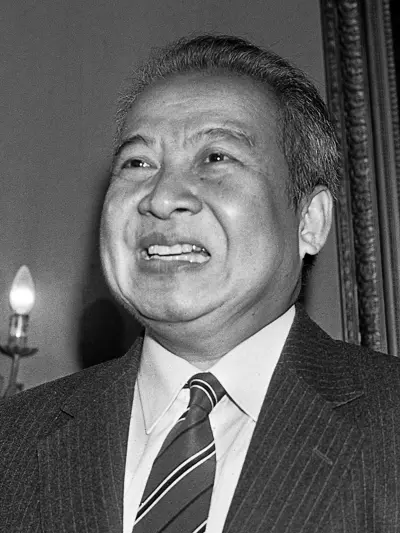
Norodom Sihanouk was a Cambodian politician who led Cambodia in various capacities throughout his political career, but most often as the King of Cambodia. In Cambodia, he is known as Samdech Euv (Khmer: សម្តេចឪ, 'King Father'). During his lifetime, Cambodia was variously called the French Protectorate of Cambodia (until 1953), the Kingdom of Cambodia (1953–1970), the Khmer Republic (1970–75), Democratic Kampuchea (1975–79), the People's Republic of Kampuchea (1979–93), and again the Kingdom of Cambodia (from 1993).
