John Stuart Mill Quotes
At some period, however, of their history, almost every people, now civilized, have consisted, in majority, of slaves. A people in that condition require to raise them out of it a very different polity from a nation of savages.
John Stuart Mill, 1806-1873, Member of Parliament, British Political Economist, Representative Government, 1861
Sourced by: Eigen's Political and Historical Quotations


The Confederates had a strategy of obtaining material assistance, prestige and recognition from England during the civil war. Confederate diplomats reported favorable attitudes of English diplomats. However, Southern leaders were in absolute denial about and insensitive to the revulsion that most of Europe and the sophisticated nations felt about slavery at the time." 1st Viscount Lyons


As an entertainer she had toured much of the world and seen American slavery and that of some other nations. She became a staunch abolitionist and like entertainers in the 20th and 21st centuries she used her celebrity to give anti-slavery lectures and perform for audiences where she donated the proceeds of the event to the abolition cause. She is a particularly interesting political figure in that she seems to be one of the first entertainers to perform for a social cause and become an activist.


Most people do not realize that the best economic argument for retaining American slavery was made by the Father of Communism himself. What Marx did not realize was how rapidly the Northern States were industrializing and how much science and technology was bushing society ahead economically. However, 15 years later, when slaves began to be emancipated, the world had changed again, and the North thrived economically and every other way without the “contribution” of the products of Southern slavery. It may have been however that in 1848, America could not have fared so well without slavery, but 1861 was a different economic era.


In early New England the General Court served as both a legislature and a judiciary before separation of powers was introduced. 5 years later the Court banned importing African slaves at all. While slavery was not common in Rhode Island, the laws was not seriously enforced on those who would defy them. It does represent a public anti-slavery sentiment that existed in Early America. It would take 200 years for Rhode Island to finally eliminate all forms of slavery.


Darwin was then a very young man, who had personal witnessed the slavery in South America and the Caribbean when he was on his famous expedition on HMS Beagle. See {630961} & {630962}. He was so disgusted with slavery that he hoped there would be armed slave revolutions and takeovers as had occurred in Haiti. Many of the English upper classes were radical when it came to slavery.
Pernambuco is a state of Brazil. His voyage took him to several slave countries.

Jamaica, then part of the British Empire which had outlawed slavery, was quite racially integrated with negroes and mulattos in civil positions such as magistrate. When the ship landed, the slave, John Anderson, was kept locked below deck since if he ran off and reached shore, the Jamaican authorities would have declared him a free man. The presence of the captive negro slave leaked out and a group of Jamaicans boarded the ship uninvited and forcibly removed Anderson, He was taken before a Jamaican magistrate who declared him a free person. The ship’s captain demanded that the authorities return the American private property which had been stolen from an American ship by a “mob”. Harrison, the US Counsel complained to the Jamaican Governor of the “Insult” to the American Flag that had taken place and demanded redress. In both efforts, the original decision of the magistrate was supported and Anderson was a free man. Harrison, an ardent Southerner from Virginia was apoplectic and asked the State Department to make this case a major issue in relations with London. His description of the public opinion then in Jamaica was classic. His racial bias was even supplemented by a virulent anti-Semitism because not only had Jewish Jamaican merchants supported abolition of slavery but some had intermarried with Negroes who had converted to Judaism.


Jefferson was then the United States Minister to France. While in Paris he was offered membership by M. de Warville in the Society for the Abolition of the Slave-Trade. Jefferson felt that he had to decline because his joining would have been seen as a politically polarizing act, inappropriate for an Ambassador of the American government which was divided on the issue of slavery. Some criticize the refusal and argue that this would have been the perfect act to push the abolition perspective, and question Jefferson’s sincerity about slavery as he not only refused to join the society, but never freed his own slaves though it is argued that he never made enough money to afford to emancipate them.

What was particularly interesting about this quotation is that Pinkney was a political leader of Maryland, a slave state. He saw the injustice and immorality of slavery but like many others of our founding fathers assumed that ending slavery would infringe on the property rights of the slave holders. Others argued that there can be no right to deny others their basic rights—property and wealth are subordinate to natural rights. See {632258} and {632259} for more on this point.


“Manumitting” means the freeing of slaves. See Quotation 643600 for Laurens’ view of slavery despite the fact that he was a substantial slave owner. He was willing to lose the money represented by the value of his slaves, but most slave owners self interest was to the contrary. One of the most interesting thing about this quotation is the fact that Laurens received so much opposition from his fellow South Carolinians and other Southerners despite the fact that only Laurens would lost money by freeing his slaves. Even slave owners who wanted to do the right thing and were willing to lost the money were under enormous social and political pressure not to free slaves.
This law required the treatment of Blacks as whites were then treated with respect to indentured servitude—a limit of 10 years after which the person would be free. However, this law was poorly enforced. The “General Court” was the name for the legislature of the Rhode Island colony.

At that time, Russia and Germany were autocracy, and the ruler could simply take the English money and force the soldiers to fight in a war they had not stake in nor understood.
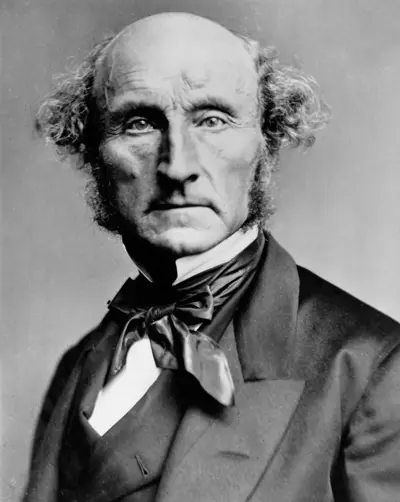
John Stuart Mill, usually cited as J. S. Mill, was an English philosopher, political economist, Member of Parliament, and civil servant. One of the most influential thinkers in the history of classical liberalism, he contributed widely to social theory, political theory, and political economy. Dubbed "the most influential English-speaking philosopher of the nineteenth century", he conceived of liberty as justifying the freedom of the individual in opposition to unlimited state and social control.
