William Pinkney Quotes
… by the eternal principles of natural justice, no master in the State has a right to hold his slave in bondage for a single hour; but the law of the land, which … we can not in prudence or from a regard to individual rights abolish, has authorized a slavery as bad or perhaps worse than the most absolute, unconditional servitude that ever England knew in the early ages of its empire
What was particularly interesting about this quotation is that Pinkney was a political leader of Maryland, a slave state. He saw the injustice and immorality of slavery but like many others of our founding fathers assumed that ending slavery would infringe on the property rights of the slave holders. Others argued that there can be no right to deny others their basic rights—property and wealth are subordinate to natural rights. See {632258} and {632259} for more on this point.
William Pinkney, 1764–1822 U. S. Congressman & Senator (Maryland), U. S. Attorney General, Minister to England & Russia, Speech, For the Relief of Slaves, Maryland Legislative Assembly, 1788
Sourced by: Eigen's Political and Historical Quotations

What was particularly interesting about this quotation is that Pinkney was a political leader of Maryland, a slave state. See {632259} and {632257} for more on this point.
What was particularly interesting about this quotation is that Pinkney was a political leader of Maryland, a slave state. See {632258} and {632257} for more on this point.

As an entertainer she had toured much of the world and seen American slavery and that of some other nations. She became a staunch abolitionist and like entertainers in the 20th and 21st centuries she used her celebrity to give anti-slavery lectures and perform for audiences where she donated the proceeds of the event to the abolition cause. She is a particularly interesting political figure in that she seems to be one of the first entertainers to perform for a social cause and become an activist.

Baron Brougham and Vaux


Our Founding Fathers were divided into three general views about slavery. There were abolitionists for whom slavery was abominable and should be eliminated—these were mostly in the Northern States but with a few Southerners. Then there was the opposite view held by most Southerners, that slavery was not only a natural and moral institution but it was an economic and social necessity. Last were those like Laurens, George Washington and Thomas Jefferson. Slave owners who grew up with slavery as a norm but came to see its evils and the complexity of change and reform in that area.


Although Wedgwood was a business man and ceramic manufacturer, he was a staunch abolitionist. He made these medallions by the thousands and gave them to all who would receive them. The text became the motto of the anti-slavery society. It was one of the first examples of a logo – a symbol for a political cause being very effective.

Southern secession and the Civil War This is one of the major quotations with which historians rebut the revisionist view that the Civil War was about States’ Rights or other economic factors.


The political conflict between the right of the slave to liberty and the right of the slave owner to his property made the immediate abolition of slavery very difficult after the Spanish had been overthrown in South America.

Southerners from the slave states wanted California to be admitted to the Union as a slave state. But a large majority of Californians saw that as a terrible alternative. It was argued that the Southern states would never vote to admit California if it were a free state (see {613404}) and in order to make it clear to the South that admission as a slave state was out of the question, this clause was passed at the Constitutional Convention.

Even before we had a Constitution there was major opposition to slavery. The “price” of the American Union was the acceptance of the slavery of the South. But the hypocrisy of a country based on liberty to allow and enforce slavery was not lost on the founding fathers. Ironically the abolitionists among the founding fathers were certain that they could persuade the Southern slaveholders of the error of slavery in a few years and things would be set right in the land. Even George Washington {630626}, and Thomas Jefferson and some other slaveowners at the time wished to see its abolition. Slaveholding Southern Founding Fathers in general were so wary of the abolitionists that they achieved structural, disproportionate, power in the new Constitution to ward off the abolitionists attempts to reform slavery.


Hopkins was complaining about the fact that England could tax the colonies and thereby take their property without their consent made the American colonists in the “miserable condition of slaves.” Essentially the fundamental complaint of the Americans was this and in a decade it would erupt as the American Revolution. At the same time, Hopkins was a slave owner and yet saw nothing wrong with that.


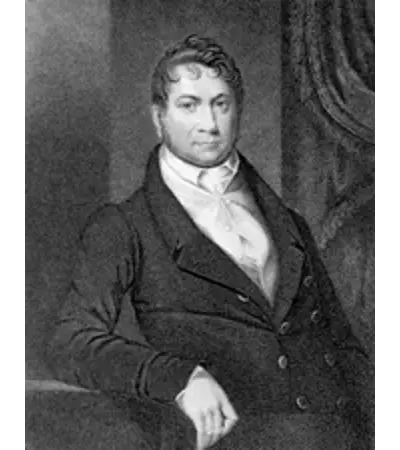
- Born: March 17, 1764
- Died: February 25, 1822
- Nationality:
- Profession:
William Pinkney was an American statesman and diplomat, and was appointed the seventh U.S. Attorney General by President James Madison.
