Franz Halder Quotes
The reason is that a military defeat of Britain will bring about the disintegration of the British Empire. This would not be of any benefit to Germany.
Halder, Franz. The Halder War Diary 1939-1942. Edited by Charles Burdick and Hans-Adolf Jacobsen, Presidio Press, 1988, entry for 13 July 1940.

1st Viscount Grey of Fallodon. He was advocating British entry into WWI in defense of the Neutrality of Belgium as was their treaty obligation.


This is the kind of threat that was used by Germany before the First World War. It worked with Turkey, but King Albert realized that being an “ally” of Germany meant losing independence anyway. Belgium would not join Germany, so the Germans invaded Belgium in 1914. Belgians fought with the allies and at the end of WWI, they were able to rebuild their independent state and thrive until they were again invaded by Germany in WWII. Turkey, in contrast, lost their entire empire, as a result of their fighting as German allies in WWI.


Patton was a great fighting general, but a disaster at civilian and public relations. At a time when the American and British governments were arguing that their involvement in world war two was for the benefit and protection of mankind, Patton made public statements like this one.

See the American ambassador’s assessment after the war began {41089}


At the end of WWII there was much tension between Russia and the Anglo-American alliance. This plan was developed but never implemented. See {613195} for Prime Minister Winston Churchill’s description of the invasion idea.


The final decision regarding the attack on Pearl Harbor and war with America had to be made. The Emperor Hirohito, Prime Minister Tojo, the full cabinet and leading elder statesmen were invited. Hara attended as one of the latter class. America had instituted an embargo of critical raw material whose end was contingent of Japan withdrawing from the territory that they had invaded and stop their territorial aggression in Asia, an aggression which some Japanese leaders—notably the military—was absolutely necessary to provide for the growing Japanese population and its increasing standard of living. At the time, an embargo was a powerfully effective weapon, which left Japan only two choices: Withdrawal or War. In modern times nations have chosen to endure and evade embargoes rather than be forced into undesirable positions.


At the time, the major European countries were in a competitive scramble for colonies in Africa—so much so that there were very few independent territories left. The maps and borders of Africa were really decided by the Europeans.


Wilson was a virulent racist—the worst in this respect since Andrew Johnson. Blacks were not his only target. Anything that threatened white supremacy was a problem for him.

A few months later, that is exactly what Germany did. She was hoping that England would not enter the war despite her treaty obligations, but she was willing to risk the possibility. The Czar had a strong espionage and intelligence service active in Germany, but, like so many other intelligence failures, the intelligence operatives and analysts had military and economic facts but had little understanding of the German culture which propelled Germany to what to most other cultures was “irrational policy making.” People and nations often engage in irrational activities, even against their own self-interest.

The Times regretted that the Germans did not speak to the Austrians more vigorously when they were threatening to attack Serbia who harbored anti-Austro-Hungarian terrorists (see {642085}). What the Times editors did not realize was that the Germans had already made their war plans (see {642092}) and the Serbian issue was just the justification they needed to implement them. So there was no real reason for the Germans to discourage the Austro-Hungarian Empire from its mission to punish Serbia.


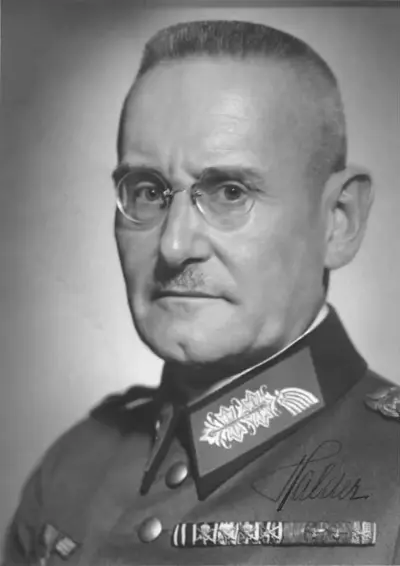
Franz Halder was a German general and the chief of staff of the Army High Command (OKH) in Nazi Germany from 1938 until September 1942. During World War II, he directed the planning and implementation of Operation Barbarossa, the 1941 invasion of the Soviet Union. Halder became instrumental in the radicalisation of warfare on the Eastern Front. He had his staff draft both the Commissar Order (issued on 6 June 1941) and the Barbarossa Decree (signed on 13 May 1941) that allowed German soldiers to execute Soviet citizens for any reason without fear of later prosecution, leading to numerous war crimes and atrocities during the campaign. After the war, he had a decisive role in the development of the myth of the clean Wehrmacht.
