Charles Kenneth Leith Quotes
The political control of this great industrial weapon means political supremacy both in war and peace. The history of the increasingly bitter struggle between France and Germany for control of the industry indicates a growing recognition of this fact.
Charles Kenneth Leith, 1875-1956, Geologist, “The World Iron and Steel Situation in Its Bearing on the French Occupation of the Ruhr”, Foreign Affairs, March 1923
Sourced by: Eigen's Political and Historical Quotations


Honore Gabriel Victor Requiti

He was arguing for a preemptive attack rather than wait to be attacked.


On the United States’ competition with China:

At the time France and Germany controlled different parts of the Ruhr Valley. Each believed that they should control it all and the other had no right to control any of it. This never did get settled and was one of the justifications Germany gave in WWII for invading the area. Haskins was one of only three assistants who were part of Woodrow Wilson’s team that negotiated the Treaty of Versailles ending WWI.
The War Plan that the Germans had developed--{642092}—had gone awry at the battle of the Marne in late 1914.

The Germans did not believe the British would send land troops. See {642105}.


The Germans pretended to maintain the treaty and when the French totally evacuated the Rhineland, Hitler started his preparation for WWII and a little later invaded France. Clemenceau had been snookered.


The existing treaties of many of the different European countries like the NATO Treaty obliged them to assist their allies if they were involved in war. Once Austria attacked Serbia, Russia had to assist Serbia against Austria. Germany then joined with Austria and that triggered the treaty whereby France had to support Russia. And when Germany overran Belgium to attack France, England was obligated to come to Belgium’s defense. The only country that had planned for and wanted war was Germany who used her obligation to Austria as the excuse to implement her war plans (see {642092}). The entire Western World was at war when all but one nation wanted to avoid war. The communications and diplomacy of the time could not keep up with events and one of the worst wars in history ensued.

This was an amazing prediction for the time. Most Europeans were not sure that the United States would even survive, and Russia was looked upon as the most backward nation in Europe. By the middle of the 20th century—over 100 years after Tocqueville wrote this—The United States and Russia were the two superpowers of the world.


The Times regretted that the Germans did not speak to the Austrians more vigorously when they were threatening to attack Serbia who harbored anti-Austro-Hungarian terrorists (see {642085}). What the Times editors did not realize was that the Germans had already made their war plans (see {642092}) and the Serbian issue was just the justification they needed to implement them. So there was no real reason for the Germans to discourage the Austro-Hungarian Empire from its mission to punish Serbia.

This is the kind of threat that was used by Germany before the First World War. It worked with Turkey, but King Albert realized that being an “ally” of Germany meant losing independence anyway. Belgium would not join Germany, so the Germans invaded Belgium in 1914. Belgians fought with the allies and at the end of WWI, they were able to rebuild their independent state and thrive until they were again invaded by Germany in WWII. Turkey, in contrast, lost their entire empire, as a result of their fighting as German allies in WWI.
English foreign and military policy had been so effective that English citizens had been completely sheltered from all the British military hostilities throughout the world. Keyserlingk and other German military planners, observing the effect that home public opinion had on war policies and practices, placed a high priority on bringing war to the British civilians and sinking merchant ships was the one way they had technologically open to them. Latter, in WWII, the same objective was achieved by the bombing of the Blitz—bombing of London and other cities with planes and rockets.
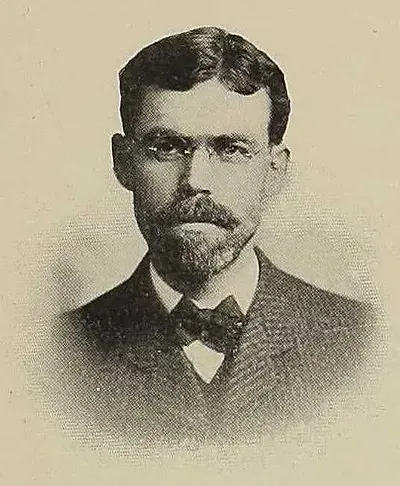
Charles Kenneth Leith was an American geologist. He was head of the University of Wisconsin geology department for 30 years. In 1942, he was awarded the Penrose Medal by the Geological Society of America, the highest award given in the geosciences.
