Georges Clemenceau Quotes
I obtained the occupation of the Rhineland for fifteen years, with partial evacuation after five years. If Germany does not fulfill the treaty, there will be no evacuation either partial or definitive. At last I am no longer anxious. I have obtained almost everything I wanted.
The Germans pretended to maintain the treaty and when the French totally evacuated the Rhineland, Hitler started his preparation for WWII and a little later invaded France. Clemenceau had been snookered.
Georges Clemenceau, 1841-1929, French Premier & Journalist, Statement to General Mordacq at the Treaty of Versailles Negotiations, April 15, 1919
Sourced by: Eigen's Political and Historical Quotations

Nicolson was an eyewitness to the proceedings.

He was exactly right. Two decades later Germany had started WWII.

This illustrates one of the reasons that the Israeli Arab conflict has been unsolvable over the years. A thousand years ago, the Arabs were a leading intellectual and military power in the world. The rest of the world has moved ahead and they have actually retrogressed. So the Arabs seek dignity which is very elusive. They have never wanted to negotiate terms with Israel when they have been weak and feel defeated. So the pattern has been that they feel they cannot negotiate for justice as they are too week. So periodically they attack Israel which has always defeated them and hoped that after the Arab defeat, permanent negotiations for peace could take place. But the Arabs were feeling too weak. So they just repeated all their extreme demands. After a few years, they would try another attack, lose again and the cycle would repeat. The Israelis fear that if the Arabs every won a war, the Arab moderates might be willing to reasonably negotiate, the extremists would want to continue the fighting and “drive the Israelis into the sea” as they have so often threatened.

since the end of WWI The railroads were nationalized for WWI and he ran them all as a government official

After WWI, the Germans were reluctant to make the reparation payments that they had agreed to in the WWI peace treaty. The French, to “motivate” the Germans, occupied the German Ruhr Valley—an area that contained very important German heavy industry and coal mines that could not function under the occupation. See {640090}.

1st Earl Lloyd-George of Dwyfor

In the history of diplomacy and peace treaty negotiations, the various national representative would meet in secret, negotiate treaties and add secret clauses. Then the treaty was finally made public for approbal or ratification in the different countries no one would be told of the secret clauses. Each side would have a written secret copy of these clauses, but the publics of the country would never know. For example, the agreements about various WWII issues that were secret have not yet been made public in the United States or England. Wilson wanted to put an end to that diplomatic ploy and wanted all the peace treaty clauses to be public with nothing secret. He also wanted the deliberations to made in public woth press access. He had little support for the idea in most European nations.

Germany was the enemy but the allies were fighting with each other over the treaty negotiations. David Lloyd George was the Prime Minister of England who was negotiating for that country.
The railroads were nationalized for WWI and he ran them all as a government official. There have been political situations like this one where public opinion was so intense and extreme that any action that satisfied public opinion would have very negative aspects and/or be unrealistic or impossible while realistic solutions are unacceptable to public opinion. Usually, the reaction of the politicians is to punt and simply not deal with the issue or problem but claim that they are seeking a solution.

Germany had just attacked Russia with whom it had a treaty. For a while, Hitler paid little attention to Italy and just gave their “ally” orders and instructions. Italian public opinion was concerned about the same question. See {627973} .
After WWI, the Germans were reluctant to make the reparation payments that they had agreed to in the peace treaty. The French, to “motivate” the Germans, occupied the German Ruhr Valley—an area that contained very important German heavy industry and coal mines that could not function under the occupation. See {640091}.


and later wife. Stevenson is describing the German foreign minister’s behavior at Versailles and Lloyd George’s angry reaction.

1st Earl Lloyd-George of Dwyfor


Wilson had asked him to give more consideration to the German point of view in World War I peace negotiations.

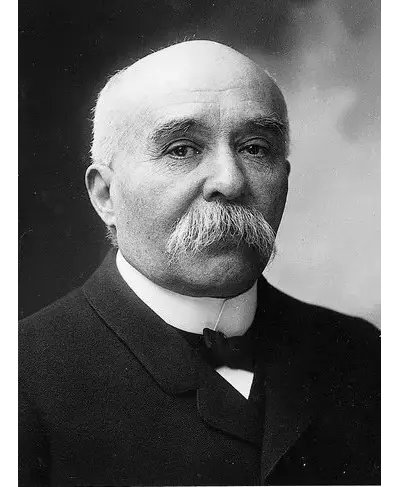
Georges Eugène Benjamin Clemenceau was a French statesman who served as Prime Minister of France from 1906 to 1909 and again from 1917 until 1920. A popular figure of the Independent Radicals, he played a central role in the politics of the Third Republic, most notably successfully leading the country through the end of the First World War.
