Margaret MacMillan Quotes
In my view, Germany could and should have made reparations for its aggression in World War I - but was the risk of renewed war worth forcing it to do so?
MacMillan, Margaret. Paris 1919: Six Months That Changed the World. Random House, 2002.


Nicolson was an eyewitness to the proceedings.

at the end of World War I 1st Earl Lloyd-George of Dwyfor

Germany was the major axis power of which Turkey was a partner in WWI. The Germans could easily have stopped the Turks from their genocidal attacks on the Armenians, but they considered it and chose not to. Likewise, the United States and other neutral nations did not make strong initial protests when the attacks started. Turkey was one of the largest empires of the world then and its Ottoman Empire controlled almost all of the Middle East and its oil.
The Christian Armenians, a minority in Turkey and its lands, were discriminated against like other non Muslim minorities in the Ottoman Empire. But during the Turkish War with Russia and WWI, some Armenians defected and served on the Russian side. Many Turkish citizens took revenge on Armenians by means of murder and torture. Soon, the extermination of the Armenians became the official “Young Turk” government policy. Hundreds of thousands of Armenians were killed outright, and about an equal number were “deported” to special areas. Many died of malnutrition along the forced march of Ethnic Cleansing. Others were murdered as they were deported. No one knows exactly how many Armenians were killed with estimates ranging from ½ million to 4 million. This was the first genocide of the 20th century. Modern Turkish leaders however, are in denial about the Armenian deaths. They claim that there was a war and food was scarce; the only Armenians killed, the claimed were proven Russian agents. They further claim that the Armenian behavior was in large part responsible for the forced deportations because of their lack of patriotism and unwillingness to help the Turkish authorities identify the Russian agents. Most Turks today are unaware of the Armenian Genocide as nothing is taught about the massacres in schools or other institutions. It is against the law in Turkey to even have an intellectual study of the Turkish behavior towards the Armenians, much less publish anything about it.

The Germans pretended to maintain the treaty and when the French totally evacuated the Rhineland, Hitler started his preparation for WWII and a little later invaded France. Clemenceau had been snookered.

The Lusitania was an American passenger liner that was torpedoed by the German U-Boats. Edith Cavell was a British nurse who was assisting all wounded in Belgium, and Captain Charles Fryatt, was an English Merchant Captain who when his ship was attacked by a German submarine, fought back and rammed and sank the sub. In each case the German behavior was contrary to the then norms of civilized warfare.

The railroads were nationalized for WWI and he ran them all as a government official. There have been political situations like this one where public opinion was so intense and extreme that any action that satisfied public opinion would have very negative aspects and/or be unrealistic or impossible while realistic solutions are unacceptable to public opinion. Usually, the reaction of the politicians is to punt and simply not deal with the issue or problem but claim that they are seeking a solution.

Germany had just attacked Russia with whom it had a treaty. For a while, Hitler paid little attention to Italy and just gave their “ally” orders and instructions. Italian public opinion was concerned about the same question. See {627973} .
After WWI, the Germans were reluctant to make the reparation payments that they had agreed to in the WWI peace treaty. The French, to “motivate” the Germans, occupied the German Ruhr Valley—an area that contained very important German heavy industry and coal mines that could not function under the occupation. See {640090}.


The Times regretted that the Germans did not speak to the Austrians more vigorously when they were threatening to attack Serbia who harbored anti-Austro-Hungarian terrorists (see {642085}). What the Times editors did not realize was that the Germans had already made their war plans (see {642092}) and the Serbian issue was just the justification they needed to implement them. So there was no real reason for the Germans to discourage the Austro-Hungarian Empire from its mission to punish Serbia.

1st Viscount Grey of Fallodon. He was advocating British entry into WWI in defense of the Neutrality of Belgium as was their treaty obligation.
1st Viscount Grey of Fallodon. He was advocating British entry into WWI in defense of the Neutrality of Belgium as was their treaty obligation.

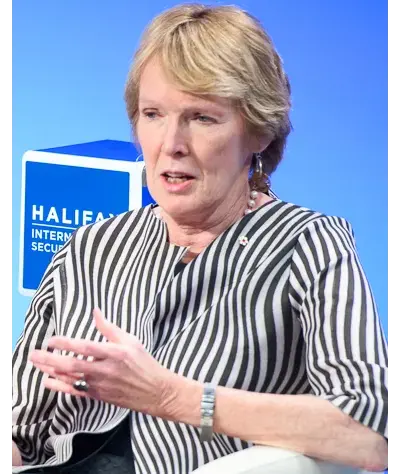
Margaret Olwen MacMillan CC CH is a Canadian historian and professor at the University of Oxford. She is former provost of Trinity College, Toronto, and professor of history at the University of Toronto and previously at Ryerson University. MacMillan is an expert on history and international relations.
