James F. Byrnes Quotes
The American people want peace. They have long since ceased to talk of a hard or a soft peace for Germany.
Byrnes, James F. "Restatement of Policy on Germany." Department of State Bulletin, vol. 15, no. 376, 15 Sept. 1946, pp. 496-501.

This is the quotation that came to define Chamberlain’s naivety for history and the icon of failed diplomacy. However to see the beginning of the sequence of events that would lead up to this statement, see {585940} when Chamberlain suggested the infamous meeting in Munich. There had been an interesting history to Chamberlain’s appeasement of Germany. 39 years earlier, Chamberlain’s father, then Britain’s Colonial Secretary, and advocated a natural alliance with Germany. See Joseph Chamberlain, 1836-1914: {585939}.

Nicolson was an eyewitness to the proceedings.


since the end of WWI The railroads were nationalized for WWI and he ran them all as a government official


1st Earl Lloyd-George of Dwyfor. For the earliest use of the phrase, see {41309}.


This illustrates one of the reasons that the Israeli Arab conflict has been unsolvable over the years. A thousand years ago, the Arabs were a leading intellectual and military power in the world. The rest of the world has moved ahead and they have actually retrogressed. So the Arabs seek dignity which is very elusive. They have never wanted to negotiate terms with Israel when they have been weak and feel defeated. So the pattern has been that they feel they cannot negotiate for justice as they are too week. So periodically they attack Israel which has always defeated them and hoped that after the Arab defeat, permanent negotiations for peace could take place. But the Arabs were feeling too weak. So they just repeated all their extreme demands. After a few years, they would try another attack, lose again and the cycle would repeat. The Israelis fear that if the Arabs every won a war, the Arab moderates might be willing to reasonably negotiate, the extremists would want to continue the fighting and “drive the Israelis into the sea” as they have so often threatened.


Germany had just attacked Russia with whom it had a treaty. For a while, Hitler paid little attention to Italy and just gave their “ally” orders and instructions. Italian public opinion was concerned about the same question. See {627973} .


Ironically, the Japanese Government and military were so polarized that it took several days for the authorities to get together and agree on a course of surrender action. The second atomic bomb dropped on Nagasaki speeded things up.


Prior to this the Japanese had not even considered what terms they might fight for if there were to be a peace negotiation. What the Japanese leadership apparently totally missed was the fact that President Roosevelt and all other American leaders throughout the war had promised that only unconditional surrender would be acceptable. This was reiterated in a Joint Declaration of the U. S. , China, and Great Britain. The Japanese thought this just propaganda and never took it seriously.


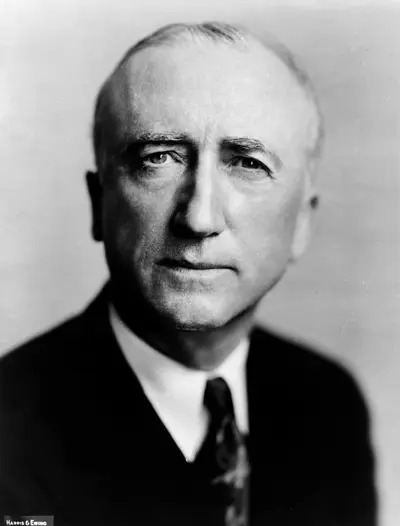
James Francis Byrnes was an American judge and politician from the state of South Carolina. A member of the Democratic Party, Byrnes served in Congress, the executive branch, and on the United States Supreme Court. He was also the 104th governor of South Carolina, making him one of the very few politicians to have served in the highest levels of all three branches of the American federal government while also being active in state government.
