Edward Mandell House Quotes
How splendid it would have been had we blazed a new and better trail! However, it is to be doubted whether this could have been done, even if those in authority had so decreed, for the peoples back of them had to be reckoned with. It may be that Wilson might have had the power and influence if he had remained in Washington and kept clear of the Conference. When he stepped from his lofty pedestal and wrangled with representatives of other states upon equal terms, he became as common clay.
Edward Mandell House, 1858-1938, Army Colonel and Aide to President Woodrow Wilson Edward Mandell House, 1858-1938, Army Colonel and Aide to President Woodrow Wilson, Description of Woodrow Wilson at the Versailles WWI Peace Conference, Diary, June 29, 1919
Sourced by: Eigen's Political and Historical Quotations


In the history of diplomacy and peace treaty negotiations, the various national representative would meet in secret, negotiate treaties and add secret clauses. Then the treaty was finally made public for approbal or ratification in the different countries no one would be told of the secret clauses. Each side would have a written secret copy of these clauses, but the publics of the country would never know. For example, the agreements about various WWII issues that were secret have not yet been made public in the United States or England. Wilson wanted to put an end to that diplomatic ploy and wanted all the peace treaty clauses to be public with nothing secret. He also wanted the deliberations to made in public woth press access. He had little support for the idea in most European nations.

1st Earl Lloyd-George of Dwyfor

In a zero sum system whenever one party gains, the other must lose, and if one loses, the other has a corresponding gain. At other times, legislation was not a zero sum game. Many Congressmen believed that if good legislation would be passed, BOTH parties would benefit as would the country. If poor or no legislation were passed, that would be bad for all.


The great European powers were attending an International Congress—Summit Meeting of the heads of government and their diplomats to deal with the crisis of Tsarist Russian military expansionism. None of the other European powers of the time wanted or could afford war so Russia could only be thwarted by Great Britain. There were many in England who thought that the British should not even attend and should send troops immediately. The Queen and the Royal Family were among those. At the Congress Disraeli, who had much personal affection for Queen Victoria, wanted to reassure her. 1st Earl of Beaconsfield. If the Congress did not succeed the mainland of Europe would have been at war. Disraeli obtained everything England wanted. See Russian Ambassador Prince Gortchakoff’s observation.


Lodge was particularly concerned that under the proposed treaty the United States would be obligated to support the League of Nations military efforts regardless of American public opinion or Congressional action.

and later wife. Stevenson is describing the German foreign minister’s behavior at Versailles and Lloyd George’s angry reaction.


He was exactly right. Two decades later Germany had started WWII.
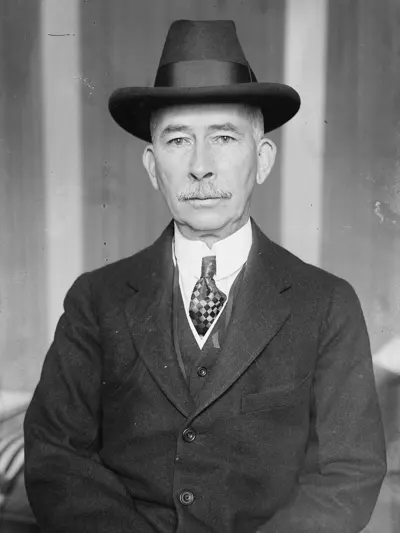
Edward Mandell House was an American diplomat, and an advisor to President Woodrow Wilson. He was known by the nickname Colonel House, although he had performed no military service. He was a highly influential back-stage politician in Texas before becoming a key supporter of the presidential bid of Wilson in 1912. Having a self-effacing manner, he did not hold office but was an "executive agent", Wilson's chief advisor on European politics and diplomacy during World War I (1914–18) and at the Paris Peace Conference of 1919. In 1919 Wilson, suffering from a series of small strokes, broke with House and many other top advisors, believing they had deceived him at Paris.
