Marvin Kalb Quotes
If anything good is going to emerge out of this, it's going to be the result of an acceptable modus vivendi between Ukraine and Russia. The two of them will have to get together at some point. It is going to be a result that many people in the West will not like, because Russia, as the bigger power, is going to get the better of the deal. So, a lot of people will say, that's appeasement. That's this - that - it's reality.
Kalb, Marvin. Interview. PBS NewsHour, Public Broadcasting Service, 2015.


See {138034} for one world leader’s candid view of treaty obligations.


In this case, the Speaker of the House attacked the President of his own party for being willing to conduct disarmament discussions with the Russians. He implied that the outcome could be the appeasement of the Russians just as British Prime Minister Neville Chamberlain appeased Hitler in 1938 in Munich, giving the German Fuhrer the “green light” to take over Europe. The Conservative Caucus went even further and explicitly called it “appeasement”. Reagan however always talked about military strength and power, and provided plenty of money for the military and weapons a few of which were boondoggles but he was a very cautious American president in authorizing military force. And he not only was willing to discuss arms control and reductions and enter into treaties for disarmament, much to the distress of the hawks of his own party. Few American Presidents have so well balanced the use of diplomacy with the threat of military force as well as Reagan.


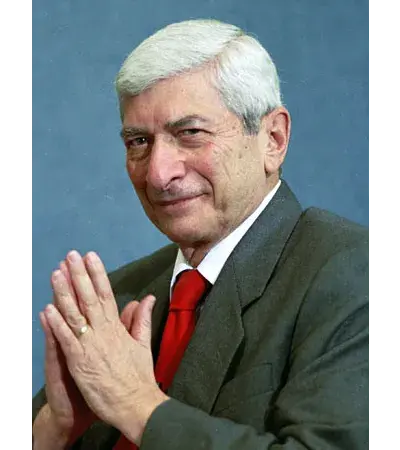
Marvin Leonard Kalb is an American journalist. Kalb was the founding director of the Shorenstein Center on Media, Politics and Public Policy and Edward R. Murrow Professor of Press and Public Policy from 1987 to 1999. The Shorenstein Center and the Kennedy School are part of Harvard University. He is currently a James Clark Welling Fellow at George Washington University and a member of the Atlantic Community Advisory Board. He is a guest scholar in Foreign Policy at the Brookings Institution.
