Paul Cambon Quotes
A great country cannot half-make war. From the moment it [Great Britain] decided to do so at sea, it was inescapably fated to do so also on land.
The Germans did not believe the British would send land troops. See {642105}.
Paul Cambon, 1843-1924, French Ambassador to Great Britain, Statement when Britain announced that it was committing land troops in WWI, 1914
Sourced by: Eigen's Political and Historical Quotations

Dreadnoughts were huge battleships. Britain had the dominant navy of the world and controlled the seas. A European war would be a land war where a navy would be of little use. Hence, Britain would not want to get involved in such a war where she could not use her greatest military strength. He was wrong about this and so much else. Britain entered WWI when Germany invaded Belgium fulfilling her treaty obligations. The Germans intelligence operators and analysts were well aware of the treaty obligations, but had little understanding of English culture and tradition. The German aggression against a small power like Belgium was morally offensive to many in Great Britain, and Britain had a tradition of fighting for moral principles. The Germans would never militarily disadvantage themselves for the sake of a treaty obligation to a small nation, and they did not believe that the British would be so different and fulfill their treaty obligations even though their strongest military asset—their navy would not be very helpful.

Although Great Britain had abolished slavery, British economic interests during the Civil War suffered because of the northern blockade of the South. Much political opinion in England was hostile to the blockade policies of the Union. Bright, a great admirer and supporter of the United Sates and the Union cause was concerned that the United States might drift into War with Great Britain. His letter to Senator Sumner was written with the understanding that it would be in shared with President Lincoln, and it was actually read at a cabinet meeting.


Churchill was then First Lord of the Admiralty. The German sinking of the Lusitania indeed did provoke America into the war.


The line was delivered by Sellers playing the President of the United States in a War Room crisis.


One difficulty of diplomacy with many Islamic leaders is that the culture produces very aggressive rhetoric and very aggressive actions like Islamic terrorism. This quotation is often cited to demonstrate that it is the Iranians that had decided that America is it’s enemy; that America is to be humbled; and that their weapons development are targeted at America. This along with the most frequent Iranian slogan, “Death to America,” for many argues for preemptive military action or maintenance of a high state of readiness. Given statements like this from the leading soldier of the theocracy, there is little doubt that Iranian nuclear weapons would be a great danger to America. Therefore when Iran complains that America did not object to the fact that other nations have the nuclear bomb, they do not take their own rhetoric into account. No other nation with possible nuclear capability has made America its major military adversity and claims as an objective to humble the United States.


There was some fear in the North that the shots fired by the Southern rebels, might encourage one or more of the European Powers to start a war with the United States. And if the Rebellion turned into a full scale Civil War, the South would surely encourage such acts be promising trade concessions in the export of Southern cotton. Seward’s confident and bellicose statement distressed some Union colleagues who feared that Seward might anger and provoke one of more of the machismo and nationalistic European Powers. However, if Seward was bluffing, the bluff worked. No country encroached on American interests during the Civil War. If he was not bluffing, he certainly, along with many others, understated the difficulty that the North would have putting down the Southern rebellion.

The War Plan that the Germans had developed--{642092}—had gone awry at the battle of the Marne in late 1914.
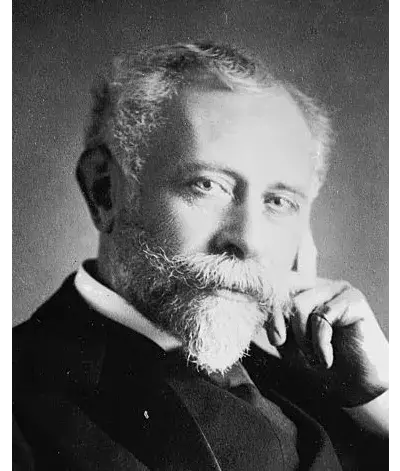
- Born: January 20, 1843
- Died: May 29, 1924
- Nationality:
- Profession:
