Arthur Helps Quotes
In all criminal cases, differences, disputes, or other causes of litigation arising between British subjects and the subjects or citizens of other foreign nations, no Moorish authority shall have a right to interfere unless a Moorish subject has received thereby injury to his person or property, in which case the Moorish authority or one of his officers, shall have a right to be present at the tribunal of the Consul; such cases shall be decided solely in the tribunals of the foreign Consuls, without the interference of the Moorish Government.
This Government Instruction to British North African Consular Personnel summarized the policies of the British government with regard to British citizens who run afoul of the law while in Morocco and other North African countries. Essentially, the British almost always insisted on a treaty with the foreign governments that gave jurisdiction to the British Counsul to try any Englishman who was accused of a crime. The national government could not put a British Subject on trial of punish him regardless of the crime. Where local people were the victim of the alleged crime, the national government could send an observer to the trial that the British consul held. To many, this was arrogant and insulting to the host governments. As high handed as it seems, there were and still are great problems with differing concepts of justice, different rights protected and different levels of corruption. In many countries “important” local officials can control or influence the decisions of courts, witnesses can be easily bribed lie, and even judges can readily be bought. Even today, the issue of criminal jurisdiction is one of the most important subjects of negotiations between nations. The United States has similar agreements with Afghanistan, Iraq, Korea, Germany, Japan and other nations where we have armed forces. Generally, the better and more sophisticated and honest the host government justice system is, the more willing modern nations are to allow them jurisdiction over criminal matters. But generally, in the world today, these treaties are the exception. Most criminal jurisdiction is with the national government where the alleged crime takes place.
Arthur Helps, 1813–1875, British Dean of the Privy Council, British Order in Council, for the Regulation of British Consular Jurisdiction in Morocco, February 4, 1875
Sourced by: Eigen's Political and Historical Quotations

Hobson, like Mark Twain in America, was a major critic of imperialism.
Hobson, like Mark Twain in America, was a major critic of imperialism.

The White Africaners were attacking the Blacks to force them off their land so the Afrkaners could take over. The country was under British rule and the unarmed Blacks were being slaughtered by the Afrikaners who were British Subjects. Eventually the Boer War set the English against the Afrikaners. See {583902} for a related quotation.

Britain was mired in Iraq. They had, as the U. S. would do about 80 years later, gone into Iraq without a viable exist strategy.

Chavez frequently insulted officials and leaders of other countries. See linked quotes for examples.


The message was conveyed by the Secretary of State, Sir George Calvert (Lord Baltimore). Parliament and the British King were jockeying for position in their relative powers. King James took the position that Parliament could NOT make laws that affected the American Colonies. Parliament disagreed. Later, some of the American patriots would use this quotation to claim that they were only subject to the King and not to Parliament. For related quotes on the King/Parliament issue, see {639144}, {639143}, {639142}, {639141}, {639140}, & {639137}
England in this quotation claims the right to interfere in the internal affairs of another nation if there is mismanagement or crises AND her national interests are affected.

Burke was one of the many members of the English Parliament who were opposed to a hard line in America in the beginning of the American Revolution and favored withdrawal after the hostilities began. The hard liners won un England and America was lost.


The British Empire Controlled Most of the Middle East in the 1920s, and they presided over most of the creations of states in the region. Churchill was a major figure in British Colonial policy. The natural borders tended to follow rivers, mountain ranges, lakes other irregular geographical elements. Borders of straight lines were almost always artificial in that men (and a few women) decided upon them as a convenience. Churchill was personally involved in much of the line drawing for borders.


Diplomatic recognition of the People’s Republic of China was being debated. Many of Churchill’s Conservative Party Colleagues were opposed on the grounds that diplomatic relations gives a signal of legitimacy. In the U. S. this general issue is a constant source of political controversy when diplomatic relations and talks are considered with Iran, Cuba and North Korea.


Hong Kong was not always a successful city or colony. In 1844 the British were thinking of swapping it for a better colony. However, in a rare combination of synergistic development of a colony, the great strengths of the Chinese and that of the English combined to make Hong Kong one of the best and well developed cities in the world. Few imperial colonies turned out as well.

This political issue has been in contention in every major world power since the Roman Empire. There has always been a division between hard liners and others. At issue is whether the nation should defend and or take up the cause of any national, individual, corporation, ideals even against a foreign country who may object to the behavior or use their own legal system to punish violators of their local laws. Failure to do so, they have argued over the years, makes the power appear weak and will invite further insult and transgressions. They claim that the government’s duty is always to protect its citizens from foreign elements regardless of whether the citizen’s behavior is right or wrong, reasonable or unreasonable, honest or dishonest. Also, this view holds that the nation should NEVER apologize as this makes it seem weak. These people have argued that it is the obverse of “My Country, Right or Wrong” and should be “Our Citizens, Right or Wrong”. On the other side, it is claimed that defending citizens or institutions that are clearly in the wrong not only is morally and ethically improper, but by being so indiscriminate, it weakens the nation’s power and credibility when it later wants to defend its citizens who are in the right and are being railroaded and discriminated against. And an apology, if the individual and institution has been in the wrong or caused harm and damage, is the proper thing to do and will often resolve matters and this is the best outcome often for the erring individual or institution. It is such a universal political issue of contention, that in the 2012 Presidential Campaign Mitt Romney had castigated President Barack Obama for apologizing to the African Nations for forcing their ancestors into American Slavery, even though Romney was very much opposed to slavery. It was the apology that makes America seem weak. The other side is that the apology shows that America has strong democratic principles and occasionally falls short, and when it does so, it acknowledges and corrects it setting a democratic example for all.


He was Defense Minister at the time. This theme was picked up later by both Israel and the United States and after September 11, President George W. Bush made it official U. S. policy.
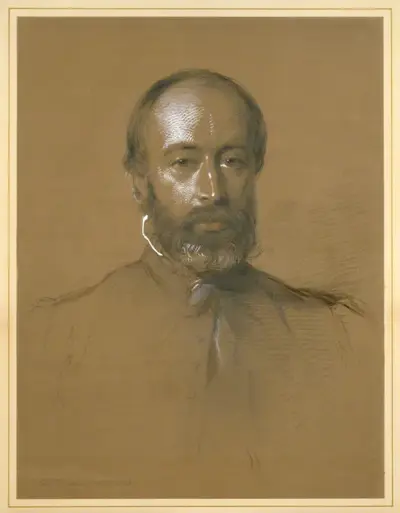
Sir Arthur Helps KCB HonDCL was an English writer and dean of the Privy Council. He was a Cambridge Apostle and an early advocate of animal rights.
