Clement Attlee Quotes
We should never get out of Iraq without wrenching something, such as the national honour or the interests of bondholders.
Britain was mired in Iraq. They had, as the U. S. would do about 80 years later, gone into Iraq without a viable exist strategy.
Clement Richard Attlee, Senior Labour Party MP and Future Prime Minister, Declaration in Parliament in 1926
Sourced by: Eigen's Political and Historical Quotations


Chamberlain’s policy was to appease Hitler and Germany to avoid war. Although he did not see Czechoslavkia as a critical British national interest and claimed he had secured peace {585941} , the reality was that he gave Germany room to start its aggression which would engulf all of Europe and much of the world. The British became the only bulwark against Hitler until the Russians stopped the Germans and America entered the war.


This seems to be the origin of the notion that democracies and republics are less likely to war with others than monarchies or dictatorships.

During the Iraq War, the Congressman partially changed his mind the following year and called for a plan to move American troops to the periphery of the fighting. A highly decorated war hero with two Purple Hearts, he was then called a coward, by some Republican members of Congress and the Bush Administration—almost always by people who had never served in the military and often sought and obtained deferments.

Many in the House were calling on England to fulfill its treaty obligations and stop Hitler and the Germans from overrunning Europe. Prime Minister Chamberlain, kept trying to appease Hitler by giving in to some of his demands. The more he gave in, the greater the demands became. Maxton was one of the few members of Parliament who wanted to give the Prime Minister more time to avoid war. Chamberlain’s efforts failed miserably and Hitler already had a huge advantage.

Webb and others believe that President George W. Bush invaded Iraq, and unseated Saddam Hussein with no intention of leaving—that the plan was to establish a permanent American presence in the Middle East.


1st Earl Lloyd-George of Dwyfor. He was the Chancellor of the Exchequer at the time, but gave the English response to the Morocco crisis.


The existing treaties of many of the different European countries like the NATO Treaty obliged them to assist their allies if they were involved in war. Once Austria attacked Serbia, Russia had to assist Serbia against Austria. Germany then joined with Austria and that triggered the treaty whereby France had to support Russia. And when Germany overran Belgium to attack France, England was obligated to come to Belgium’s defense. The only country that had planned for and wanted war was Germany who used her obligation to Austria as the excuse to implement her war plans (see {642092}). The entire Western World was at war when all but one nation wanted to avoid war. The communications and diplomacy of the time could not keep up with events and one of the worst wars in history ensued.

The “proofs” were diplomatic assurances—treaties—that England would guarantee the territorial integrity of Belgium. The British made strong diplomatic efforts to persuade Germany not to occupy Belgium. The German’s none the less send armies in under the excuse that if they did not, the French would occupy the country and have a strategic advantage over them. Diplomacy could do no more good. England had to send troops or renege on its obligations. So England was in WWI.


The English were at War with Napoleon and Denmark was neutral. British leaders feared that Denmark might either ally themselves with Napoleon or provide him with ships from their well equipped fleet. The English decided on a preemptive attack on Denmark and Paget and other Captains were ordered to Denmark. When they arrived they were ordered to bombard Copenhagen and force the Danes to surrender. When this happened, the British seized the Danish ships and simply took them as war prizes. The issues of the morality and wisdom of preemptive attacks, as with the Americans in the Iraq war, was thoroughly debated but the government view prevailed to the shame of most Englishmen.

The English were at War with Napoleon and Denmark was neutral. British leaders feared that Denmark might either ally themselves with Napoleon or provide him with ships from their well equipped fleet. The English decided on a preemptive attack on Denmark and Napier and other officers were ordered to Denmark. When they arrived, they were ordered to bombard Copenhagen and force the Danes to surrender. When this happened, the British seized the Danish ships and simply took them as war prizes. The issues of the morality and wisdom of preemptive attacks, as with the Americans in the Iraq war, was thoroughly debated but the government view prevailed to the shame of most Englishmen.


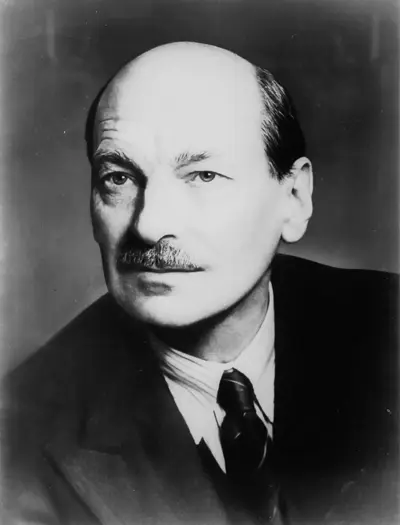
Clement Richard Attlee, 1st Earl Attlee, KG, OM, CH, PC, FRS was a British politician who was the Prime Minister of the United Kingdom from 1945 to 1951 and the Leader of the Labour Party from 1935 to 1955. Attlee was the first person to hold the office of Deputy Prime Minister of the United Kingdom, serving under Winston Churchill in the wartime coalition government. He went on to lead the Labour Party to a landslide election victory in summer 1945 and to a narrow victory in 1950. He became the first Labour Prime Minister ever to serve a full five-year term, as well as the first to command a Labour majority in Parliament and remains the longest-ever serving Leader of the Labour Party.
