James Maxton Quotes
Don't let's talk of national honor: what do such phrases mean? The plain fact is that war means the slaughter of millions. If the Prime Minister can still maintain the peace he will have saved those lives, he mustn't be rushed.
Many in the House were calling on England to fulfill its treaty obligations and stop Hitler and the Germans from overrunning Europe. Prime Minister Chamberlain, kept trying to appease Hitler by giving in to some of his demands. The more he gave in, the greater the demands became. Maxton was one of the few members of Parliament who wanted to give the Prime Minister more time to avoid war. Chamberlain’s efforts failed miserably and Hitler already had a huge advantage.
James Maxton, 1885-1946, Scottish Member of British Parliament, Labor Leader & Writer, Debate in the House of Commons, September 2, 1939
Sourced by: Eigen's Political and Historical Quotations


1st Earl Lloyd-George of Dwyfor. He was the Chancellor of the Exchequer at the time, but gave the English response to the Morocco crisis.


While Queen Mary was presenting medals to British soldiers during World War I, she said this to a soldier who had exclaimed “No more bloody wars for me”.


1st Earl Baldwin of Bewdley. Though members of the same Conservative Party, Churchill was a major opponent of Baldwin’s peace and “appeasement” efforts and publicly castigated Prime Minister Baldwin. Yet Baldwin, if he could not stave off war, wanted his critic to serve as Prime Minister if war was inevitable. Churchill never had much respect for Baldwin. See {626930}.


When he first came to Congress, there were major American problems with both France and England who were fighting each other and punishing America for not boycotting the other nation. Many argued for peace and living with the French and English impression of American seamen and confiscation of American Cargoes. Clay and others thought the appeasement price was too high and urged war. The War of 1812 followed.


The only alternative is war or national dishonor; and between these two, what American can hesitate.
Canadian lumberjacks began operations on the Aroostook River area that was in dispute between Maine and Canada:


Clinton was one of the leaders of the anti-war movement of the day. He even ran for President on the new “Peace Party.” New England, New York and many people in the Atlantic states thought the war of 1812 absurd. In reality, while the law was good for American morale and national pride, the casualties we suffered and the cost was far greater than what we were losing in our dispute with England. In actuality, France (under Napoleon) was offending America and seizing our shipping more than England. Note that Clinton was advocating negotiation even AFTER we would be attacked. This is in a way the complete opposite of the George W. Bush doctrine of preemption—attacking a hostile state BEFORE it has attacked us so as to prevent the casualties of an attack. The Bush doctrine was a great blunder in its only implementation—Iraq did NOT have the weapons of mass destruction that Bush and his administration claimed they had to justify the preemptive war.
The suffragette movement was split by WWI and the issue of pacicism. See {621265} for the pro war factional view.
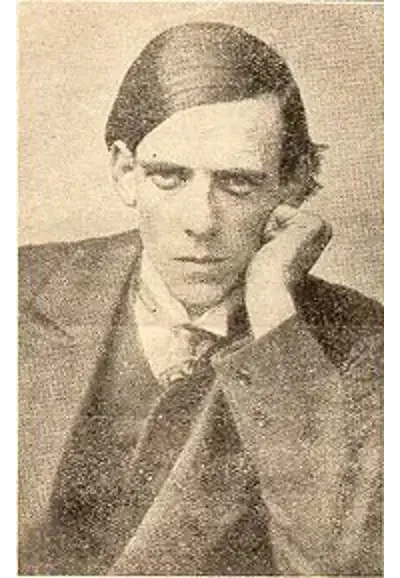
James Maxton was a British left-wing politician, and leader of the Independent Labour Party. He was a pacifist who opposed both world wars. A prominent proponent of Home Rule for Scotland, he is remembered as one of the leading figures of the Red Clydeside era. He broke with Ramsay MacDonald and the second minority Labour government, and became one of its most bitter critics. As the leader of the Independent Labour Party (ILP), he disaffiliated the ILP from the mainstream party in 1932. Afterwards, he became an independent dissident outside front-line politics.
