Henry Clay Quotes
No man in the nation wants peace more than I; but I prefer the troubled ocean of war, demanded by the honor and independence of the country, with all its calamities and desolation, to the tranquil and putrescent pool of ignominious peace.
When he first came to Congress, there were major American problems with both France and England who were fighting each other and punishing America for not boycotting the other nation. Many argued for peace and living with the French and English impression of American seamen and confiscation of American Cargoes. Clay and others thought the appeasement price was too high and urged war. The War of 1812 followed.
Henry Clay, 1777-1852, U.S. Congressman and Senator (National Republican & Whig, KY), Speaker of the House, U.S. Secretary of State, Unsuccessful presidential candidate, Maiden Speech in Congress, February 22, 1810
Sourced by: Eigen's Political and Historical Quotations


Many in the House were calling on England to fulfill its treaty obligations and stop Hitler and the Germans from overrunning Europe. Prime Minister Chamberlain, kept trying to appease Hitler by giving in to some of his demands. The more he gave in, the greater the demands became. Maxton was one of the few members of Parliament who wanted to give the Prime Minister more time to avoid war. Chamberlain’s efforts failed miserably and Hitler already had a huge advantage.

The only alternative is war or national dishonor; and between these two, what American can hesitate.
Canadian lumberjacks began operations on the Aroostook River area that was in dispute between Maine and Canada:


Jean the Good. It was not uncommon for wealthy nobles who were about to be defeated on the field of battle to offer bribes to the opposition soldiers to take them to their lines or headquarters. However, the leaders of the Army wanted to have charge of the important prisoners and the terms of their potential ransom. In this case the English knights started fighting amongst themselves as to who would take and ransom the French King, when two high ranking English nobles who had been dispatched by the Prince of Wales to look for the French King. They ordered the knights to desist their internal fighting, and the French King was delivered to the Prince of Wales.
See Noah Webster and Timothy Pickering for similar positions. The War of 1812 was very unpopular with the New England states. They had the most developed trade with England and were economically injured by the curtailment of that trade. The citizens of Essex wanted to give the State Legislature the most possible moral and political power to negotiate an end to the war.


Ataturk was a young major at the time commanding troops of a weak and corrupt Ottoman regime. However a combined English and French (the strongest military powers in Europe) invasion of the Gallipoli Peninsula threatened to capture the Turkish capital, Constantinople. Ataturk alone rallied the Turkish defenders and fought the invaders to a standoff in long drawn out battle with huge casualties on both sides. Ataturk became a national hero. Although Ataturk thereafter was very reluctant to use military force or endanger troops, the thing he always thought worth the supreme sacrifice (including his own) was the independence and sovereignty of the nation. See {584502} for his continuing belief in this type of sacrifice.

On October 31, 1803, Tripolitan forces captured the ship Philadelphia and imprisoned the whole crew. The Pasha (provincial governor) of Tripoli, Yusef Karamanli demanded that the United States not only pay a ransom for the prisoners but an annual tribute to Tripoli.


By the 21st century, there were few who would agree with Roosevelt on this point. The contributions of inventors and scientists and then business men and financiers.

The Russian motivation for going to the aid of Serbia when the Austro-Hungarian Empire attacked that country was religious affinity. Both were of the Orthodox Church and the Orthodox Slaves had historically been attacked by the Roman Catholic Teutons. Russia had exercised hegemony over regions outside of Russia where there were Christian Orthodox co-religiouists.


The existing treaties of many of the different European countries like the NATO Treaty obliged them to assist their allies if they were involved in war. Once Austria attacked Serbia, Russia had to assist Serbia against Austria. Germany then joined with Austria and that triggered the treaty whereby France had to support Russia. And when Germany overran Belgium to attack France, England was obligated to come to Belgium’s defense. The only country that had planned for and wanted war was Germany who used her obligation to Austria as the excuse to implement her war plans (see {642092}). The entire Western World was at war when all but one nation wanted to avoid war. The communications and diplomacy of the time could not keep up with events and one of the worst wars in history ensued.

Although a member of the Prime Minister’s party and Cabinet, Cooper was so outraged that he called for Chamberlain’s resignation leading to Winston Churchill becoming Prime Minister.

2nd Viscount Melbourne. The “American treaty” was the Webster–Ashburton Treaty to adjust the final borders between Canada and the United States that were still in dispute from the War of 1812. Note that the British Prime Minister was critical of the position that was being taken be some British diplomats. In many American negotiations with Russia and others, there are hard liners who believe that the negotiators want too much to preserve peace and are not sufficiently willing to go to war for the nation’s principles and honor. As this quotation shows, this is not just an American phenomenon, but in almost all nations there are hard liners critical of all international negotiations and fearing that a desire for an agreement will undermine the positions that should be taken. This is an example where the hard liners were on the non American side.


The Chancellor was referring to the United States George W. Bush proposal for war with Iraq.

1st Earl of Beaconsfield. Contrast this statement with that of Neville Chamberlain returning from Munich in 1941. Disraeli had threatened war and forced the Russians to accept all the British demands by diplomatically isolating them first and moving armed troops into position just before the peace conference.


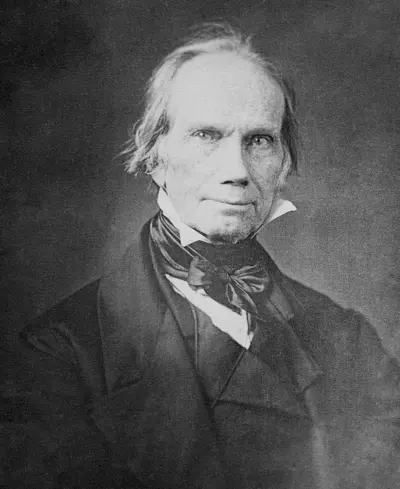
Henry Clay Sr. was an American attorney and statesman who represented Kentucky in both the Senate and House. He was the seventh House Speaker and the ninth Secretary of State. He received electoral votes for president in the 1824, 1832, and 1844 presidential elections. He also helped found both the National Republican Party and the Whig Party. For his role in defusing sectional crises, he earned the appellation of the "Great Compromiser" and was part of the "Great Triumvirate".
