Neville Chamberlain Quotes
I make an earnest appeal to those who hold responsible positions both in this country and abroad to weigh their words very carefully before they utter them on this matter, bearing in mind the consequences that may flow from some rash or thoughtless phrase. By exercising caution and patience and self-restraint we may yet be able to save the peace of Europe.
Neville Chamberlain, 1869-1940, British Prime Minister (Conservative), Speech in the House of Commons (22nd February, 1938
Sourced by: Eigen's Political and Historical Quotations

This is the quotation that came to define Chamberlain’s naivety for history and the icon of failed diplomacy. However to see the beginning of the sequence of events that would lead up to this statement, see {585940} when Chamberlain suggested the infamous meeting in Munich. There had been an interesting history to Chamberlain’s appeasement of Germany. 39 years earlier, Chamberlain’s father, then Britain’s Colonial Secretary, and advocated a natural alliance with Germany. See Joseph Chamberlain, 1836-1914: {585939}.


She had gone to Europe where the 2nd World War was raging.

Theodore Roosevelt was the Presidential nominee. Johnson was a leader of some members of Congress some of whom were extreme isolationists and some of whom were Nazi sympathizers and Hitler admirers. When the Japanese attacked Pearl Harbor later that year, Germany, fulfilling its treaty with Japan, declared war on America, Johnson’s group no longer mattered. Before WWII most Republicans were opposed to Defense Spending and accused the Democrats of being war hawks. After WWII, they flip flopped and became more hawkish than the Democrats who they accused of being soft on defense for years thereafter. See {631380} for President Roosevelt’s different view.

Although Great Britain had abolished slavery, British economic interests during the Civil War suffered because of the northern blockade of the South. Much political opinion in England was hostile to the blockade policies of the Union. Bright, a great admirer and supporter of the United Sates and the Union cause was concerned that the United States might drift into War with Great Britain. His letter to Senator Sumner was written with the understanding that it would be in shared with President Lincoln, and it was actually read at a cabinet meeting.


The Russians were breaking diplomatic relations with Israel.

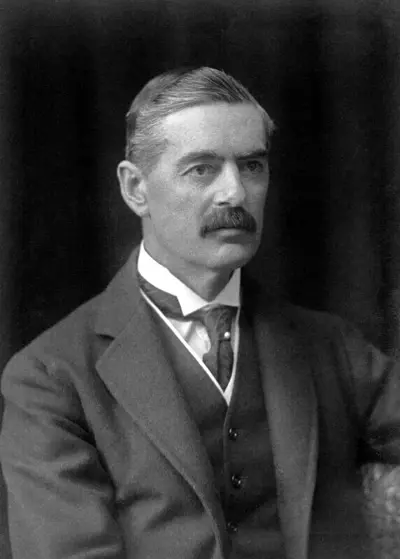
Arthur Neville Chamberlain FRS was Prime Minister of the United Kingdom and Leader of the Conservative Party from 1937 to 1940. He is best known for his foreign policy of appeasement, and in particular for his signing of the Munich Agreement on 30 September 1938, conceding the German-speaking Sudetenland region of Czechoslovakia to Germany. Following the German invasion of Poland on 1 September 1939, which marked the beginning of World War II, Chamberlain announced the declaration of war on Germany two days later and led the United Kingdom through the first eight months of the war until his resignation as prime minister on 10 May 1940.
