Nathaniel Hawthorne Quotes
I will allow myself to call it devilish; for this was the new war fiend, destined, along with others of the same breed, to annihilate whole navies and batter down old supremacies.
As in modern times the Navy encouraged the media and leading writers to promote their latest weaponry. Hawthorne however shortly after the Monitor and the Merrimac battle saw the future in terms even more dramatic than most of the military.
Nathaniel Hawthorne, 1804-1864, Writer, Description of the Monitor, The Atlantic Monthly, July 1862
Sourced by: Eigen's Political and Historical Quotations


This quotation not only gives us an interesting description and reaction to the first generation of ironclad ships, but we get an insight into the amazingly open access that was available to the most important new weapon of the Union. Apparently, there was still hope of a Southern cessation of fighting and rejoining the Union, and the aim was to get as much publicity about the new weapon as possible to the Confederates to persuade them of the futility of their situation. The North could manufacture as many of these vessels as they needed, while Confederates could only refit wooden ships with metal siding. There were few ships that were suitable for such refitting and the ironworks of the South were limited and needed for cannon, railroad tracks and other uses all competing for limited production capacity. Hawthorne went on board the Monitor without making any special arrangements at all. He just showed up and went aboard.


There were few military thinkers at that time who would agree with Goebbels on this point.


The most important weapons of the time involved gunpowder or other explosives, and the chemist was the most important weapons maker until the middle of the 20th century when a weapons system was first designed that did not use chemical explosives—nuclear weapons. Then the physicists became predominant.


See {635101} for a much ealier view of war’s uncertainty.


As influential and revered as he was, Houston would not overcome the drive for secession by the wealthy, large, slave holders of Texas.

The description was of the battle field at Bull Run. The Times even then was very candid. The public was shocked and some thought it unpatriotic to print this.


The Democrats used this quotation during the 1964 presidential campaign, in a famous TV ad with a little girl, a mushroom cloud and the announcer quoting Goldwater.

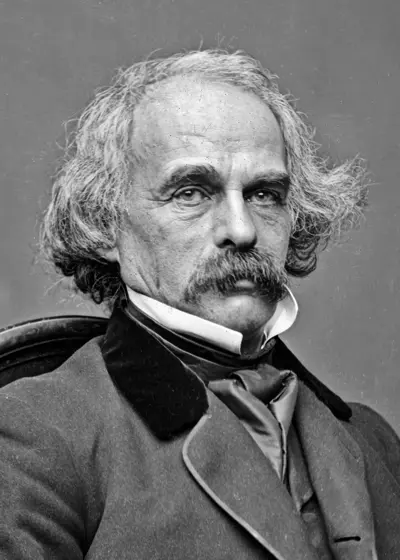
Nathaniel Hawthorne was an American novelist, dark romantic, and short story writer. His works often focus on history, morality, and religion.
