Andy Rooney Quotes
You really can’t blame the military for wanting to go to war [in Iraq]. They’ve got all these new toys and they want to know whether they work or not.
Andy Rooney, 1919-2011, 1919-2011, TV columnist and humorist, Interview, C-SPAN Book TV, December 10, 2002
Sourced by: Eigen's Political and Historical Quotations


America, England, Germany and France Many Japanese leaders predicted war between the Great Powers while America and its European Allies did not see the danger as clearly. Shortly after 1936, Hitler began the Second World War. Japan was indeed prepared. Hiranuma became one of the Japanese extremists and after WWII was convicted of war crimes and given a life sentence.

This was written when the United States was not a dominant military power. At the beginning of the 20th century, the U. S. had the same size military as Argentina. It was France, German, Turkey and England who had the military superiority and it was they who tended to find excuses for war. After WWII, the U. S. was dominant and was involved with a number of wars and military incursions, often with nations that had not attacked the U.S. Korns’ principle was most dramatic when the George W. Bush administration invaded Iraq on the excuse that the Iraqis were developing weapons of mass destructions and then might attack the United States. After the successful invasion, the excuse was shown to be hollow as there were no signs of sophisticated weapons development.

What is interesting about this quote is that it is very much like many American politicians who support a large and strong military.


the modern believe is that democracies are not prone to war, especially against other democracies. Seward, and some others believe that democracies can be pushed into war by politicians you do so for partisan political advantage. Politicians often have to show how tough they are.


Later, he felt that the offense had become almost invincible. See {626741}. Tesla was one of the great American immigrant scientists. He found in America the kind of intellectual and operational freedom that did not exist in the rigid, monarch-controlled, Austro-Hungarian Empire. He developed patents and techniques that formed the technological bases of radio, telephone long distance, TV, cell phones, Wi Fi, just to name a few. Most important he was Thomas Edison’s great nemesis. Edison invented DC electric generators that could power factories or entire streets in a neighborhood. Tesler invented and developed AC electrical technology which could power entire cities and he could move electricity over long distances which Edison could not. Tesler was one of the first scientists to conceive of and try to implement “Big Science” where there were huge capital investments to develop machines and systems to do what had never been done before—philosophically like the CERN Hadron Collider. Tesler even convinced a large corporation to finance the construction of a massive building and tower so he could experiment with the wireless transmission of electricity. However, as the industrial democracies have learned, Big Science can only be funded by governments and it often takes sever working in consort to afford the huge investment that is required. In Tesler’s era, the federal and state governments did not fund scientific research so his work was not only technically ahead of his time but also conceptually. He anticipated most of the problems and need for a national power grid that was challenging America even at the beginning of the 21st century.

That was an ironic statement. Shortly thereafter we invaded Mexico, occupied the country, pressured it into “selling us much of what is now the Southwest of the United States, and finally left.


Al-Alusi attended an anti-terrorism conference in Israel. He was arrested by conservatives who cited a law passed under the Hussein regime prohibiting any contact with Israelis. However, he was immediately released citing the new freedom of Iraqis to travel anywhere they want and meet with whomever they want.

Shortly after the Maine blew up in Havana Harbor:
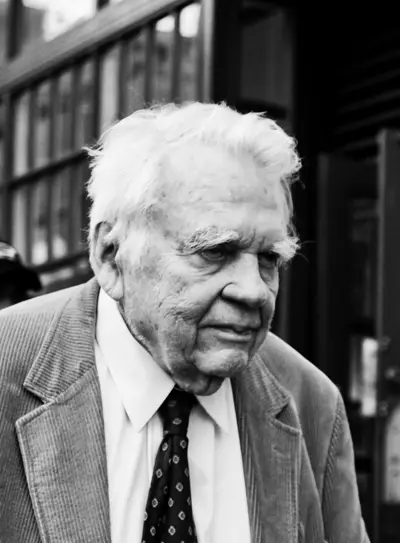
Andrew Aitken Rooney was an American radio and television writer who was best known for his weekly broadcast "A Few Minutes with Andy Rooney", a part of the CBS News program 60 Minutes from 1978 to 2011. His final regular appearance on 60 Minutes aired on October 2, 2011; he died a month later at the age of 92.
