Hermann Boerhaave Quotes
It were indeed to be wished that our art had been less ingenious, in contriving means destructive to mankind; we mean those instruments of war, which were unknown to the ancients, and have made such havoc among the moderns. But as men have always been bent on seeking each other's destruction by continual wars; and as force, when brought against us, can only be repelled by force; the chief support of war, must, after money, be now sought in chemistry.
The most important weapons of the time involved gunpowder or other explosives, and the chemist was the most important weapons maker until the middle of the 20th century when a weapons system was first designed that did not use chemical explosives—nuclear weapons. Then the physicists became predominant.
Hermann Boerhaave, 1668-1738, Dutch physician, botanist and chemist., A New Method of Chemistry
Sourced by: Eigen's Political and Historical Quotations


Some think that for Europe, Nuclear Weapons performed this function.


Later, he felt that the offense had become almost invincible. See {626741}. Tesla was one of the great American immigrant scientists. He found in America the kind of intellectual and operational freedom that did not exist in the rigid, monarch-controlled, Austro-Hungarian Empire. He developed patents and techniques that formed the technological bases of radio, telephone long distance, TV, cell phones, Wi Fi, just to name a few. Most important he was Thomas Edison’s great nemesis. Edison invented DC electric generators that could power factories or entire streets in a neighborhood. Tesler invented and developed AC electrical technology which could power entire cities and he could move electricity over long distances which Edison could not. Tesler was one of the first scientists to conceive of and try to implement “Big Science” where there were huge capital investments to develop machines and systems to do what had never been done before—philosophically like the CERN Hadron Collider. Tesler even convinced a large corporation to finance the construction of a massive building and tower so he could experiment with the wireless transmission of electricity. However, as the industrial democracies have learned, Big Science can only be funded by governments and it often takes sever working in consort to afford the huge investment that is required. In Tesler’s era, the federal and state governments did not fund scientific research so his work was not only technically ahead of his time but also conceptually. He anticipated most of the problems and need for a national power grid that was challenging America even at the beginning of the 21st century.


This appears to be the first American utterance of a longstanding doctrine of foreign policy.

The atomic bomb had just been used the year before. However, in the next decades, nuclear weapons were not used again as those nations with nuclear capability also had potential enemies with nuclear weapons. The fear of Mutually Assured Destruction prevented nuclear weapons from being used for a long time.

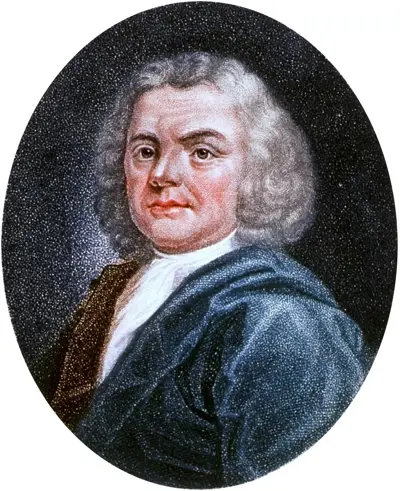
Herman Boerhaave was a Dutch botanist, chemist, Christian humanist, and physician of European fame. He is regarded as the founder of clinical teaching and of the modern academic hospital and is sometimes referred to as "the father of physiology," along with Venetian physician Santorio Santorio (1561–1636). Boerhaave introduced the quantitative approach into medicine, along with his pupil Albrecht von Haller (1708–1777) and is best known for demonstrating the relation of symptoms to lesions. He was the first to isolate the chemical urea from urine. He was the first physician to put thermometer measurements to clinical practice. His motto was Simplex sigillum veri: 'Simplicity is the sign of the truth'. He is often hailed as the "Dutch Hippocrates".
