Richard Bickerton Pemell Lyons Quotes
It seems impossible that the South can be mad enough to dissolve the Union.
1st Viscount Lyons
Richard Bickerton Pemell Lyons, 1817—1887, , British Ambassador to the United States, British Ambassador to France, Report to British Foreign Minister John Russell, November 1860
Sourced by: Eigen's Political and Historical Quotations


After the Presidential years of James Buchanan who protected the South from slavery reform and abolition as the North was gaining political power and the abolitionists were having a greater and greater effect on public opinion in the North. While Southerners did not believe Lincoln would emancipate the slaves, they realized that the majority of the growing nation was opposed to slavery, and more and more Northern states were passimg laws making any slave who sets foot in the State a free person. Slaves coud not only have more reason to run away, but slave owners would not be able to get their “property” back. Lincoln would not help the South as Buchanan did, and the Southerners realized that over time, slavery would no longer be feasible or profitable. Cobb, very experienced at Washington politics, realized the changes that would come and thought that they would be “certain and speedy.” The irony was that if the South had not seceded and simply dragged its feet legislatively, it would have taken two or three decades for slavery to end. However, by seceding and initially fighting so hard and well while poor Union generals were in command, Lincoln was forced to try more drastic measures and issued the Emancipation Proclamation after only a few years. The Civil War and seccession was not only a tactical and strategic error for the South, but rapidly brought about just what the Southerners were fighting to prevent.

Some Southerners, in order to obtain support in England for the Confederate cause claimed in their propaganda that slavery was not the issue but their issue with the Union was just one of local and regional autonomy. The British and most Europeans at that time were strongly against slavery so this “spin” might have gotten some support. Stowe and others put the lie to this, and the Confederacy never did get any significant material support from any country in Europe. The secession resolutions of the Southern States all state that Slavery was the cause (and often the ONLY cause stated) of secession. Also Southern General Mosby, called the spin for what it was. See {584991}.


As just one example of Southern States' reasons, see {583044}. Many of the Northern States had passed laws declaring everyone in the state was free and making it illegal to return or assist in the returning of escaped slaves. The Southerners got the Federal Fugitive Slave Act passed which required all Americans to assist in recapturing escaped slaves. It was the Northern States who claimed states' rights were being trampled. The South was vehemently opposed to States' Rights when it came to allowing individual states to decide who was free and who was not. The Southerners had only one fundamental reason for secession—the maintenance of the Negro slavery system on which much of their economy depended as did their sociology, culture, and way of life.

The words are those of President Andrew Jackson. See {604550}. After occupying New Orleans, General Butler infuriated the Confederate Sympathizers with this act. Jackson was the hero of the Battle of New Orleans and an unapologetic slave owner. The Southerners had erected a magnificent statue of their hero Jackson on horseback in a major section of the city. Butler, then ordered that the Jackson quotation be chiseled in the stone base. The townspeople were furious that this Union General would make up words and attribute them to Jackson; however, when they finally realized that Jackson had actually said those words they felt even more humiliated. There are still a few Southernors who consider this terrible insult to the Confederacy, and of course that is just what Butler intended.


In many respects, it is amazing that secession did not take place earlier.

The Governor was a staunch Confederate supporter but his state legislature majority favored the Union. He was forced out of the governorship when the 1861 election gave the legislature a veto-proof pro Union majority.
It is often said that “elections have consequences”. The 1960 election was one that certainly had profound consequences. Lincoln was unwilling to force the Northern states to return fugitive slaves against the constitution, laws and will of the people of those states as Buchanan said he was (but had a hard time doing). Also Lincoln was unwilling to allow new territories to enter the union if they allowed slavery. In the end, most pro Slavery politicians realized that with the greater growth rate of the North, they Southern disproportionate power in the Congress was doomed as would be the institution of slavery itself. Crittendon a strong Unionist from a border state, understood the implication of Lincoln’s election for the Union.


Bragg and other Southerner leaders had an unusual concept of equality. Ever since the original Constitution, Northerner’s votes counted for themselves only while a single Southerner’s vote counted for all his slaves as well. So the individual Southerner always had more political power than his Northern counterpart. However, this notion of equality reached it’s acme when it came to the new territories. The Southern argument was that Southerners could not equally prosper in the new territories of Kansas and Nebraska if they could not bring their slaves to work the land. The thought that Southerners were equally able to personally work the new lands or pay labor seems to never have occurred to them. If Northerners could prosper that way then Southerners should be equally able to do so also. However, many Southern whites simply could not conceive of a “gentleman” working in the fields. Therefore they would not be equally able to prosper in the new territories.


The Prime Minister had a penchant for mis-assessing world affairs in both the old world and the new.
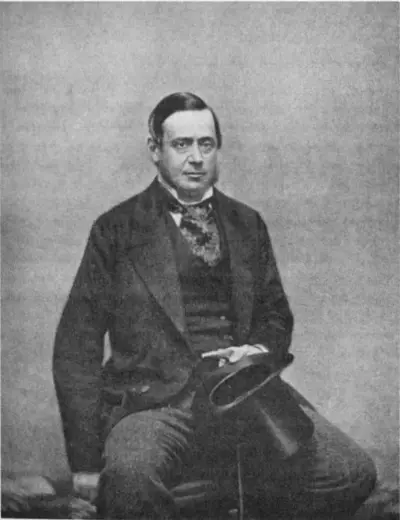
Richard Bickerton Pemell Lyons, 1st Earl Lyons GCB, GCMG, PC was an eminent British diplomat, the favourite of Queen Victoria. Lyons was the most influential British diplomat during each of the four great crises of the second half of the 19th century: Italian unification; the American Civil War; the Eastern Question; and the replacement of France by Germany as the dominant Continental power subsequent to German Unification. Lyons is best known for solving the Trent Affair during the American Civil War; for laying the foundations for the Special Relationship and the Entente Cordiale; and for predicting, 32 years before World War I, the occurrence of an imperial war between France and Germany that would destroy Britain's international dominance.
