William H. Seward Quotes
The people of the North are not enemies but friends and brethren of the South, faithful and true as in the days when death has dealt his arrows promiscuously among them on the common battlefields of freedom.
William H. Seward, 1801-1872, Governor of New York (Whig), U.S. Senator (Whig & Republican, NY), U. S. Secretary of State, Reference to the Southern States, Senate Speech, January 29, 1860
Sourced by: Eigen's Political and Historical Quotations

See {584897} for a quotation from the speech. Spinning and giving advance copies of speeches to the press is not the invention of the 20th century media-savvy political handlers. It was a standard practice even in the 19th century.

The “mystic chords of memory” which is one of the most famous Lincoln phrases. As great as this address was, it did not succeed in its purpose of maintaining the Union and preventing secession.


The amendments failed as did the compromise.


Garrison and some of the other radical abolitionists actually argued for dissolution of the Union as a means to end slavery. These abolitionists were convinced that if the United States split in two, slavery would end. See {613764} & {613626} for a description of the logic.


Gusley had been captured by the Confederates and was in a prison camp. Richardson published Gusley’s diary and Southerners were surprised to find that this Yankee who had been bombarding them from a ship was very similar to them in many ways including slavery but saw the situation regarding succession as worth fighting for preservation of the Union.

The Governor was a staunch Confederate supporter but his state legislature majority favored the Union. He was forced out of the governorship when the 1861 election gave the legislature a veto-proof pro Union majority.
See Mark {606304}; also Matthew {606727}. Lincoln had used the “house divided” biblical metaphor in 1843 when arguing for Whig solidarity. The first political use of the Biblical metaphor and quotation with respect to American slavery appears to have been by Sam Houston in 1850 {603970}. The first use with respect to American slavery was byMassachusetts abolitionist, Edmund Quincy, in 1852. The second sentence of this famous quotation was forsaged earlier. See Lincoln, {619494} & {584918}. Also See Felix Rohatyn who used the Lincoln line to refer to poverty: {70611}.


Bragg and other Southerner leaders had an unusual concept of equality. Ever since the original Constitution, Northerner’s votes counted for themselves only while a single Southerner’s vote counted for all his slaves as well. So the individual Southerner always had more political power than his Northern counterpart. However, this notion of equality reached it’s acme when it came to the new territories. The Southern argument was that Southerners could not equally prosper in the new territories of Kansas and Nebraska if they could not bring their slaves to work the land. The thought that Southerners were equally able to personally work the new lands or pay labor seems to never have occurred to them. If Northerners could prosper that way then Southerners should be equally able to do so also. However, many Southern whites simply could not conceive of a “gentleman” working in the fields. Therefore they would not be equally able to prosper in the new territories.


This was before secession and “Confederacy” as Lincoln was using the term referred to the Confederacy or the original 13 states and the territories that joined the Union thereafter.


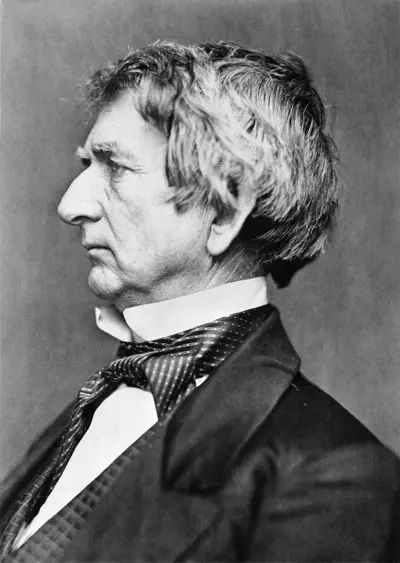
- Born: May 16, 1801
- Died: October 10, 1872
- Nationality: American
- Profession: Statesman
William Henry Seward was United States Secretary of State from 1861 to 1869, and earlier served as governor of New York and as a United States Senator. A determined opponent of the spread of slavery in the years leading up to the American Civil War, he was a prominent figure in the Republican Party in its formative years, and was praised for his work on behalf of the Union as Secretary of State during the Civil War.
