Charles Carroll Quotes
An imperfect and somewhat unequal Confederacy is better than none.
Maryland was the last state to ratify the Articles of Confederation, not doing so until March 1, 1781.
Charles Carroll, 1737-1832, Member of the Continental Congress (MD), U.S. Senator (Federalist, MD), Maryland State Senator, Statement to his father.
Sourced by: Eigen's Political and Historical Quotations


Maryland had not yet ratified, and was not to do so until March 1, 1781, yet Jay operationalized the new nation with this letter.
The Iroquois had a very successful confederacy of 6 tribes in a relatively democratic government with a written constitution. They dominated the Eastern part of North America for years. The were able to maintain a permanent unity with a unified and decentralized combination of government—much like the United States would become. At the time of this advice, each American colony was a government unto itself. The three Iroquois Indian delegates were Canassatego, Tachanoontia, and Gachradodow.

Bragg and other Southerner leaders had an unusual concept of equality. Ever since the original Constitution, Northerner’s votes counted for themselves only while a single Southerner’s vote counted for all his slaves as well. So the individual Southerner always had more political power than his Northern counterpart. However, this notion of equality reached it’s acme when it came to the new territories. The Southern argument was that Southerners could not equally prosper in the new territories of Kansas and Nebraska if they could not bring their slaves to work the land. The thought that Southerners were equally able to personally work the new lands or pay labor seems to never have occurred to them. If Northerners could prosper that way then Southerners should be equally able to do so also. However, many Southern whites simply could not conceive of a “gentleman” working in the fields. Therefore they would not be equally able to prosper in the new territories.

At the time his Vice President, John C. Calhoun, was expounding a theory of “nullification” by which the states could supersede and nullify federal law in their states. When Jackson finished his toast, it was Calhoun’s turn (See {635896}.) His toast supported the States’ Rights position over the federal government. In those days Presidents and Vice President’s were often political enemies or of opposite parties. The President’s advisors thought that his toast might be misinterpreted. So when they gave the toast to the press as “The Federal Union: It must be preserved.” That was the form in which the press reported the President’s toast and for many years that was the version most quoted even though it was never delivered that way. However Jackson was responsible for both versions.


The debate had come to an impasse over the issue of voting and taxation by state equally or proportional to the population. Witherspoon warned of the consequence of there being no agreement on some form of unity.


There were many who wanted even faster and more vigorous steps toward independence. Abigail Adams was one. John’s view was that such a large and diverse country could not act and reform suddenly. The nation was much smaller in population and area then but culturally quite diverse. Since then the same argument has been made in every generation.


This was before secession and “Confederacy” as Lincoln was using the term referred to the Confederacy or the original 13 states and the territories that joined the Union thereafter.


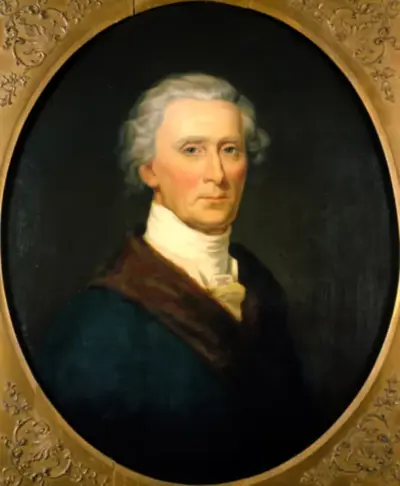
Charles Carroll, known as Charles Carroll of Carrollton or Charles Carroll III to distinguish him from his similarly-named relatives, was an American statesman, a wealthy Maryland planter, an early advocate of independence from Great Britain and one of the signers of the American Declaration of Independence. The sole Catholic signer of the Declaration, he is one of the Founding Fathers of the United States. Carroll was known contemporaneously as the "First Citizen" of the American Colonies, a consequence of signing articles in the Maryland Gazette with that pen name. He served as a delegate to the Continental Congress and Confederation Congress. Carroll later served as the first United States Senator for Maryland. Carroll was the wealthiest and possessed the highest formal education of all of the signers of the Declaration of Independence. A product of his 17-year Jesuit education in France, Carroll spoke five languages fluently.
