John Jay Quotes
For every purpose essential to the defense of these states in the progress of the present war, and necessary to the attainment of the objects of it, the States are as fully, legally and absolutely confederated as it is possible to be.
Maryland had not yet ratified, and was not to do so until March 1, 1781, yet Jay operationalized the new nation with this letter.
John Jay, 1745-1829, President of the Continental Congress, Governor of New York (Federalist), U. S. Foreign Secretary, First Chief Justice of the U. S. Supreme Court, Letter, September 8, 1779
Sourced by: Eigen's Political and Historical Quotations

Maryland was the last state to ratify the Articles of Confederation, not doing so until March 1, 1781.


He was communicating the Resolution of the Continental Congress.


The Constitution had not yet been written. The new nation was struggling under a system which almost all agreed was inadequate. The legislatures of the states of New York, New Jersey, Pennsylvania, Delaware, and Virginia agreed to hold a mini convention to determine what could be done. The Constitutional Convention a year later was the outgrowth of the recommendations of this Annapolis meeting.

The debate had come to an impasse over the issue of voting and taxation by state equally or proportional to the population. Witherspoon warned of the consequence of there being no agreement on some form of unity.


He was referring to President Jefferson’s inclination to send the military against the Barbary Pirates. They had an incredible extortion racket going in the Mediterranean. If nations would pay them an annual sum each year, they would not attack and seize merchant ships of that country and sell the ships and goods while holding the sailors for ransom. Note that Congress was not very well respected at that time which Jay and most leaders did not think was a good thing, much like in the 21st century.


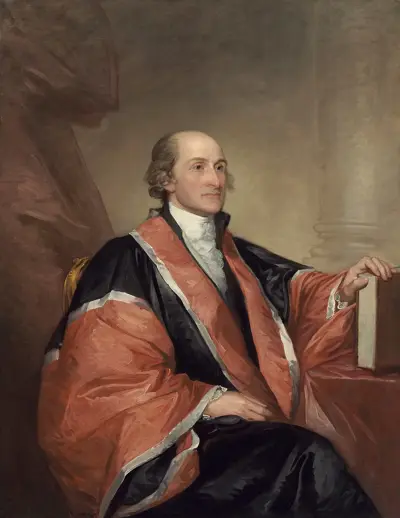
John Jay was an American statesman, patriot, diplomat, Founding Father, abolitionist, negotiator, and signatory of the Treaty of Paris of 1783. He served as the second Governor of New York and the first Chief Justice of the United States (1789–1795). He directed U.S. foreign policy for much of the 1780s and was an important leader of the Federalist Party after the ratification of the United States Constitution in 1788.
