James Wilson Quotes
The probability is much greater, that the larger States will disagree, than that they will combine. I defy the wit of man to invent a possible case, or to suggest any one thing on earth, which shall be for the interests of Virginia, Pennsylvania and Massachusetts, and which will not also be for the interest of the other States.
James Wilson, 1742-1798, Legal Philosopher, U. S. Supreme Court Justice, Pennsylvania Delegate to the Continental Congress & the Constitutional Convention, Debate on the Articles of Confederation, ~July 31, 1776
Sourced by: Eigen's Political and Historical Quotations

Maryland was the last state to ratify the Articles of Confederation, not doing so until March 1, 1781.

The debate had come to an impasse over the issue of voting and taxation by state equally or proportional to the population. Witherspoon warned of the consequence of there being no agreement on some form of unity.

The smaller states were insisting on an equal vote for each state (colony). However, when it came to paying taxes to the national government, they wanted a head tax so that the total tax was proportional to the population. Franklin, representative from Pennsylvania, one of the larger states, wanted the voting power to parallel the tax burden.


Maryland had not yet ratified, and was not to do so until March 1, 1781, yet Jay operationalized the new nation with this letter.


When whites first came to America, the Iroquois, were the most sophisticated Native Americans. They were actually a confederation of 5 different tribes each of which was composed if many clans. Although fierce warriors, they had agreed not to fight each other and to assist if any were attacked. They developed a strong agricultural base, to go with the fishing and hunting, and their confederation were very aggressive and sophisticated traders taking them far from their upstate New York “capitol.” Their governmental structure was quite sophisticated with an elaborate, formal, system of checks and balances, multi-cameral legislatures that recognized numbers of citizens, power and wealth, and even cultural traditions. They were literate, capitalistic and globalistic in that they wanted to trade with all. They had written laws, and women had a role that was unique in world history in that only women owned property in a matrilineal society. Further, it was only the Clan Mothers who voted for the 50 Sachems (~Senators)—but their selections had to be accepted by the people they represented. Ironically the descendants of the Iroquois who remained in New York became a very successful Native American group. In the 2000 census, the average Indian in New York State earned the same income as the average White with no Indian gambling money.


Dix finally broke with the Democrats over the slavery question and became a Republican.


This proverb operates with the force of law and in a sense is the doctrine of contributory negligence. I have a right to compensation for damage you have done me unless I have done something which impinges on your rights. If your camel destroys my crops, my rights have been violated, but if had used your camel without your permission, and he got out of control. I right is cancelled out. In a larger sense, this principle is used globally in international disputes. The Israeli right to live in peace has been, in the view of some Arabs, “cancelled out” by the fact that the Israelis have taken others land.


See {138034} for one world leader’s candid view of treaty obligations.
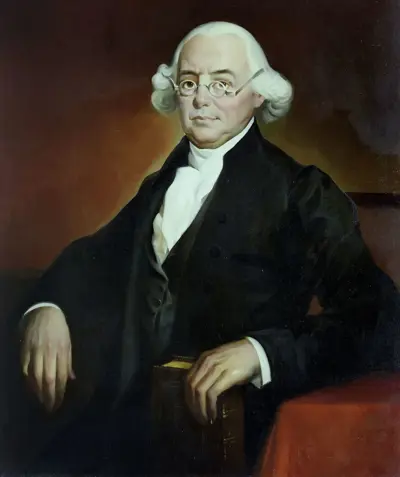
James Wilson was one of the Founding Fathers of the United States and a signatory of the United States Declaration of Independence and the United States Constitution. Wilson was elected twice to the Continental Congress, where he represented Pennsylvania, and was a major force in drafting the United States Constitution. A leading legal theorist, he was one of the six original justices appointed by George Washington to the Supreme Court of the United States.
