John Witherspoon Quotes
Should the idea get abroad that there is likely to be no union among us, it will damp the minds of the people, diminish the glory of our struggle, and lessen its importance; because it will open to our view future prospects of war and dissension among ourselves
The debate had come to an impasse over the issue of voting and taxation by state equally or proportional to the population. Witherspoon warned of the consequence of there being no agreement on some form of unity.
John Witherspoon, 1723-1794, Presbyterian minister, President of Princeton University, Member of the Continental Congress (NJ) & Signer of the Declaration of Independence Debate on the Articles of Confederation, July 12, 1776
Sourced by: Eigen's Political and Historical Quotations

Compare Mark 3:25, above, and Abraham Lincoln's use of the phrase in one of his most famous speeches.


The smaller states were insisting on an equal vote for each state (colony). However, when it came to paying taxes to the national government, they wanted a head tax so that the total tax was proportional to the population. Franklin, representative from Pennsylvania, one of the larger states, wanted the voting power to parallel the tax burden.


Maryland was the last state to ratify the Articles of Confederation, not doing so until March 1, 1781.

This is a variant of the famous Lincoln quotation, {619494}. Houston did not use the word “house” as had Lincoln but surely, as did Lincoln, was familiar with The Book of Mathew {606727}. Houston however gave his speech BEFORE Lincoln.


The Vietnam War was raging and the country was polarized by it. The real issue of the time, as we were in the war, was whether we could better obtain peace by winning victories in the field causing the enemy to want to negotiate or to withdraw and produce peace unilaterally. In the end we tried a little of both reflecting the division in the nation. We succeeded at neither strategy and the polarization continued for many decades.


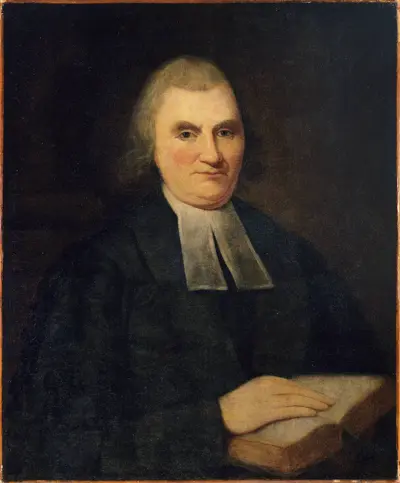
John Witherspoon was a Scottish American Presbyterian minister and a Founding Father of the United States. Witherspoon embraced the concepts of Scottish common sense realism, and while president of the College of New Jersey (1768–1794; now Princeton University), became an influential figure in the development of the United States' national character. Politically active, Witherspoon was a delegate from New Jersey to the Second Continental Congress and a signatory to the July 4, 1776, Declaration of Independence. He was the only active clergyman and the only college president to sign the Declaration. Later, he signed the Articles of Confederation and supported ratification of the Constitution. In 1789 he was convening moderator of the First General Assembly of the Presbyterian Church in the United States of America.
