Benjamin Franklin Quotes
If we vote equally, we ought to pay equally.
The smaller states were insisting on an equal vote for each state (colony). However, when it came to paying taxes to the national government, they wanted a head tax so that the total tax was proportional to the population. Franklin, representative from Pennsylvania, one of the larger states, wanted the voting power to parallel the tax burden.
Benjamin Franklin, 1706-1790, Member of the Continental Congress & the Constitutional Convention, Governor of Pennsylvania, President of the Pennsylvania Assembly, U.S. Minister to France, Postmaster General of the American Colonies, Debate on the Articles of Confederation, ~July 31, 1776
Sourced by: Eigen's Political and Historical Quotations

The debate had come to an impasse over the issue of voting and taxation by state equally or proportional to the population. Witherspoon warned of the consequence of there being no agreement on some form of unity.


This quotation from the Koran is used by some to show that Islam was ahead of the West in terms of allowing women to earn their own money and inherit property. In this sense Islam was in the 7th Century far ahead of their Christian and Jewish Counterparts.
However, with this initial start, there is no version of Sharia (Islamic Law) that provides for men and women to earn equally for equal work. Further, there is no right to work at all. In Saudi Arabia, until 2005 women shopping for their own underwear had to buy from men as women were not allowed to be retail clerks. And the Taliban in Afghanistan required women to remain in their home and not work any other place. Even female doctors and nurses were not allowed to work in hospitals. Although they were allowed to control whatever meager income they might earn in their homes.


This was more than 30 years earlier than the United States.


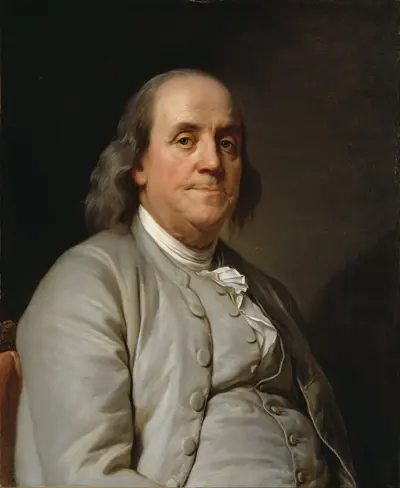
Benjamin Franklin FRS FRSA FRSE was one of the Founding Fathers of the United States. A polymath, he was a leading writer, printer, political philosopher, politician, Freemason, postmaster, scientist, inventor, humorist, civic activist, statesman, and diplomat. As a scientist, he was a major figure in the American Enlightenment and the history of physics for his discoveries and theories regarding electricity. As an inventor, he is known for the lightning rod, bifocals, and the Franklin stove, among other inventions. He founded many civic organizations, including the Library Company, Philadelphia's first fire department, and the University of Pennsylvania.
