Bertolt Brecht Quotes
Society cannot share a common communication system so long as it is split into warring factions.
Brecht, Bertolt. Brecht on Film and Radio. Edited by Marc Silberman, Bloomsbury, 2000, p. 42.


This is a variant of the famous Lincoln quotation, {619494}. Houston did not use the word “house” as had Lincoln but surely, as did Lincoln, was familiar with The Book of Mathew {606727}. Houston however gave his speech BEFORE Lincoln.


This quotation is classic as it was the first of a series of attacks that have been made on presidents and other politicians by the economic ultra-rightists when the conservatives had disliked the politician’s economic policies. To criticize the ultra-rich and their corporations was promoting class warfare. And that criticism being made public certainly upset the confidence of the rich in the President. When the president pointed out how the average person feels about the rich, to them it was he who was responsible for the mistrust and hatred by talking about them—not them by what they were doing. This same attack has been made against every Democratic President that came thereafter, but it was first used against Republican Theodore Roosevelt. For many Liberals, the way they know that they are starting to succeed with economic reform is when they get attacked for fomenting class warfare.


The Vietnam War was raging and the country was polarized by it. The real issue of the time, as we were in the war, was whether we could better obtain peace by winning victories in the field causing the enemy to want to negotiate or to withdraw and produce peace unilaterally. In the end we tried a little of both reflecting the division in the nation. We succeeded at neither strategy and the polarization continued for many decades.


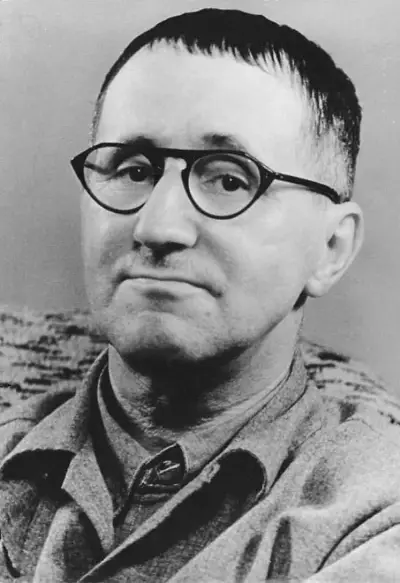
Eugen Berthold Friedrich Brecht, known professionally as Bertolt Brecht, was a German theatre practitioner, playwright, and poet. Coming of age during the Weimar Republic, he had his first successes as a playwright in Munich and moved to Berlin in 1924, where he wrote The Threepenny Opera with Kurt Weill and began a lifelong collaboration with the composer Hanns Eisler. Immersed in Marxist thought during this period, he wrote didactic Lehrstücke and became a leading theoretician of epic theatre (which he later preferred to call "dialectical theatre") and the so-called V-effect.
