Benjamin N. Cardozo Quotes
The Constitution was framed under the dominion of a political philosophy... It was framed upon the theory that the peoples of the several states must sink or swim together, and that in the long run prosperity and salvation are in union and not division.
Benjamin N. Cardozo, 1870-1938, Supreme Court Justice, Baldwin v. Seelig, 1935
Sourced by: Eigen's Political and Historical Quotations


The 10th Amendment was created to take care of this objection which Jefferson and many others had.


When President Grover Cleveland balked at introducing legislation that might be unconstitutional, he was asked:

Maryland was the last state to ratify the Articles of Confederation, not doing so until March 1, 1781.


Maryland had not yet ratified, and was not to do so until March 1, 1781, yet Jay operationalized the new nation with this letter.


It was commonly asked of Blacks applying to register. There are few people who could give a cogent response to this. What made it terrible was that the white racist registrars had the unilateral authority to determine whether or not the oral response was adequate. Recording of responses were prohibited so that no Black who was disenfranchised could ever appeal when he/she was rejected. This is one of the thousands of techniques that were used throughout the South to prevent Negro voting. They were so egregious that Lyndon Johnson was abe to force through Southern filibusters The Voting Rights Act which has eliminated the worst of the racist restrictions on Black voting. As the worst of the racist white generation has died off, Southern discrimination in voting has lessened and the situation is better each year. By 2012 there were some who claimed that the law was no longer necessary do to changes in attitude and practice, but others worried that if there were no longer any forms of discrimination in voting, why some wanted to repeal the Voting Rights Act.
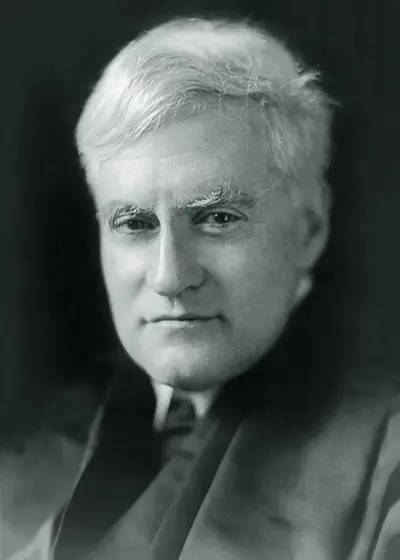
Benjamin Nathan Cardozo was an American jurist who served on the New York Court of Appeals and later as an Associate Justice of the Supreme Court. Cardozo is remembered for his significant influence on the development of American common law in the 20th century, in addition to his philosophy and vivid prose style. Cardozo served on the Supreme Court six years, from 1932 until his death in 1938. Many of his landmark decisions were delivered during his eighteen-year tenure on the New York Court of Appeals, the highest court of that state.
