Sun Yat-sen Quotes
The government should help and guide the weak and small racial groups within its national boundaries toward self-determination and self-government. It should offer resistance to foreign aggression, and simultaneously, it should revise foreign treaties in order to restore our equality and independence among the nations.
Sun, Yat-sen. Sun Yat-Sen: His Political and Social Ideals. Compiled and translated by Leonard Shihlien Hsü, University of Southern California Press, 1933, p. 128.

The highest court in New York. This was the generally accepted view of international law until WWII when atrocities and crimes against humanity were coped with. Also, at the time of this writing America was a small emerging state and not one of the great powers. Hence the prohibition of even commenting on the internal affairs of another nation was important to us. Now that America is a superpower, and society is more concerned with human rights, the point of view has changed.


Leading the Senate opposition to the League of Nations proposed by Woodrow Wilson:


Under the Kissinger Foreign Policy this was his oft stated policy. The United States however gave a great deal of advice about their internal affairs to foreign leaders. Those that did not take it, did not get as much foreign or military aid, and sometimes found themselves ousted in a coup which resulted in a regime change or with their country being boycotted.


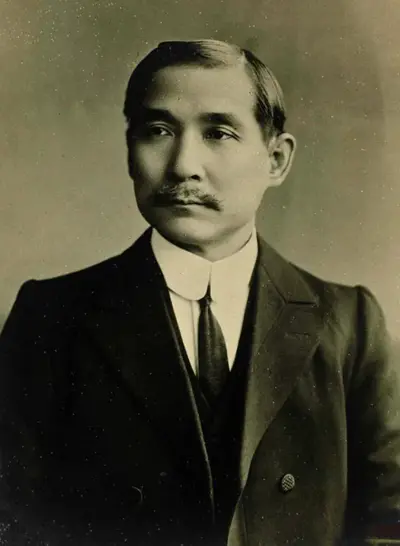
Sun Yat-sen was a Chinese statesman, physician, and political philosopher, who served as the provisional first president of the Republic of China and the first leader of the Kuomintang (Nationalist Party of China). He is referred as the "Father of the Nation" in the Republic of China, and as the "Forerunner of the Revolution" in the People's Republic of China for his instrumental role in the overthrow of the Qing dynasty during the Xinhai Revolution. Sun is unique among 20th-century Chinese leaders for being widely revered in both mainland China and Taiwan.
