Christian Rakovsky Quotes
Our policy in Asia finds its inspiration in the constitution of the Union of Soviets, which we regard as a model of political equality between different races. It even goes so far as to admit the right of nations entering into the Union to leave it of their own free will without securing the consent of other members of the Union. And we do not apply our logic to ourselves alone; we act in the interest of conserving our institutions by applying in our policy in Asia this principle of “self-determination” – an American principle, by the way, transported to Europe by the Frenchmen who took part in the American War of Independence
Christian Rakovsky, 1873-1941, Russian Ambassador to France, Premier of the Soviet Ukraine, “The Foreign Policy of Soviet Russia,” Foreign Affairs, July 1926
Sourced by: Eigen's Political and Historical Quotations

The highest court in New York. This was the generally accepted view of international law until WWII when atrocities and crimes against humanity were coped with. Also, at the time of this writing America was a small emerging state and not one of the great powers. Hence the prohibition of even commenting on the internal affairs of another nation was important to us. Now that America is a superpower, and society is more concerned with human rights, the point of view has changed.

He was an Army Major at the time he wrote this article. In 1966 his positive view of Britain was overwhelmed by the anti-colonial fervor that existed in much of Africa.


This statement became known as "The Truman Doctrine." Truman asked for $400 million to help Greece and Turkey fight stave off armed Communist minorities destabilizing their governments.


This was a very interesting quotation in that there was no scripture of any religion that even mentions the United States nor which nations would lead the world and which should follow.

The President was Woodrow Wilson and the Peace Conference was that at the end of WWI. While the right of self determination is broadly accepted in American society, it was not always so.

His appeal was also in the name of concurring heads of state of Finland, Holland, Denmark, Norway, Luxemburg, and Sweden.


The revolutionary government started out condemning annexation and insisting on self-determination for all. After WWII Stalin made a mockery of these original ideals by taking over most of Eastern Europe.

His definition of Russian territory included any area that the Czars claimed which included Poland, the Baltic States, the Ukraine, the Caucuses, but at the time of the speech, Russia was fighting to keep its existing territory.


Under the Kissinger Foreign Policy this was his oft stated policy. The United States however gave a great deal of advice about their internal affairs to foreign leaders. Those that did not take it, did not get as much foreign or military aid, and sometimes found themselves ousted in a coup which resulted in a regime change or with their country being boycotted.

Given the time, Mill’s view on the colonies were appreciated by few Englishmen, but turned out to be exactly predict the British reality a century later.

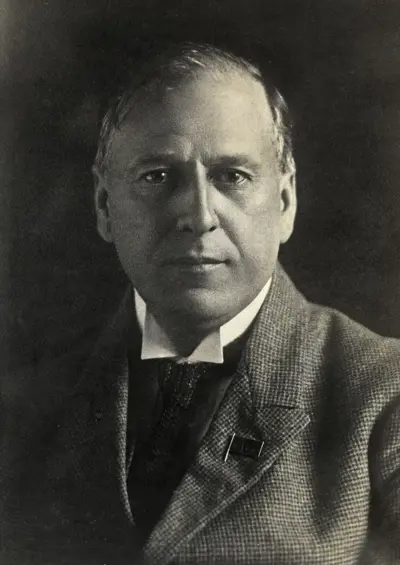
Christian Georgievich Rakovsky was a Bulgarian-born socialist revolutionary, a Bolshevik politician and Soviet diplomat; he was also noted as a journalist, physician, and essayist. Rakovsky's political career took him throughout the Balkans and into France and Imperial Russia; for part of his life, he was also a Romanian citizen.
