Edward Grey Quotes
The Chancellor also in effect asks us to bargain away whatever obligation or interest we have as regards the neutrality of Belgium. We could not entertain that bargain either.
Grey, Edward. Twenty-Five Years, 1892-1916. Vol. 1, Frederick A. Stokes Company, 1925, p. 327.

Germany had demanded that Belgium allow German troops to cross Belgium to the French frontier. However, King Albert was concerned that this would be a de facto German occupation of Belgium and asked for help. The British tried diplomacy but things were out of anyone’s control and the First World War ensued.
The “proofs” were diplomatic assurances—treaties—that England would guarantee the territorial integrity of Belgium. The British made strong diplomatic efforts to persuade Germany not to occupy Belgium. The German’s none the less send armies in under the excuse that if they did not, the French would occupy the country and have a strategic advantage over them. Diplomacy could do no more good. England had to send troops or renege on its obligations. So England was in WWI.


Dulles lied to Congress. The CIA at the time was supplying planes and American pilots in support of an anti-Sukarno Government faction that was in armed revolt. It is not clear whether or not Dulles knew the truth when he had so testified.

His appeal was also in the name of concurring heads of state of Finland, Holland, Denmark, Norway, Luxemburg, and Sweden.

Some people believe that the United States pressured Pakistan to enable America to support the Mujahideen in their effort to fight the Russian occupation of Afghanistan. Actually the President (and virtual dictator) of Pakistan wanted aid from America and was offering bases. America did not want bases but did want a platform for arming and training the Mujahideen, Pakistan allowed us to use Pakistan as a platform. We increased our foreign aid to Pakistan by 500 percent. There was no arm twisting.

There have been times in democracies where a foreign ministry (State Department) is isolated from the elected politicians and implements a foreign policy that is at odds with the wishes of the elected officials and the majority of the nation. A good American example of this was in 1948 where America had to decide whether to support the creation of the State of Israel in the United Nations and through diplomatic recognition. The professional diplomats in the State Department had developed very close relations with Arab States, and many State Department employees were anti-Semitic. In addition, they thought the most important thing for America was not to risk the Arab oil supply. Meanwhile, the people, Congress, and President Truman were on the other side and Truman had to finally order The Secretary of State to stop his professional diplomats from pursuing their own foreign policy preferences. Even then some did not.

The plan was to have an American agent with a few marines make an alliance with a rival to the throne of Algiers and depose the existing ruler with American “special forces”.

The existing treaties of many of the different European countries like the NATO Treaty obliged them to assist their allies if they were involved in war. Once Austria attacked Serbia, Russia had to assist Serbia against Austria. Germany then joined with Austria and that triggered the treaty whereby France had to support Russia. And when Germany overran Belgium to attack France, England was obligated to come to Belgium’s defense. The only country that had planned for and wanted war was Germany who used her obligation to Austria as the excuse to implement her war plans (see {642092}). The entire Western World was at war when all but one nation wanted to avoid war. The communications and diplomacy of the time could not keep up with events and one of the worst wars in history ensued.


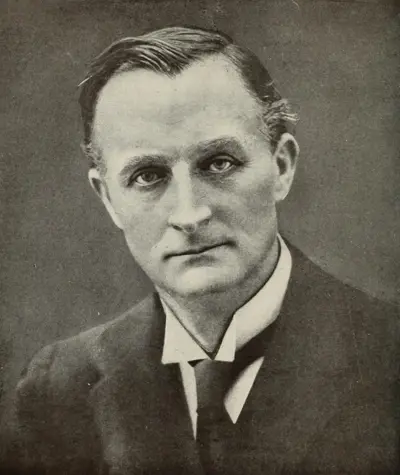
Edward Grey, 1st Viscount Grey of Fallodon, KG, PC, DL, FZS, better known as Sir Edward Grey, was a British Liberal statesman and the main force behind British foreign policy in the era of the First World War.
