George S. Brown Quotes
Governments interfere in the affairs of each other, when they conceive their own peace is endangered.
George Brown, 1818-1880, Canadian Reformer, Politician and Publisher, Premier [Governor] of Onterio, Founder of the Toronto Globe, Editorial, Toronto Globe, March 6, 1851
Sourced by: Eigen's Political and Historical Quotations


Germany had demanded that Belgium allow German troops to cross Belgium to the French frontier. However, King Albert was concerned that this would be a de facto German occupation of Belgium and asked for help. The British tried diplomacy but things were out of anyone’s control and the First World War ensued.


The “proofs” were diplomatic assurances—treaties—that England would guarantee the territorial integrity of Belgium. The British made strong diplomatic efforts to persuade Germany not to occupy Belgium. The German’s none the less send armies in under the excuse that if they did not, the French would occupy the country and have a strategic advantage over them. Diplomacy could do no more good. England had to send troops or renege on its obligations. So England was in WWI.


Dulles lied to Congress. The CIA at the time was supplying planes and American pilots in support of an anti-Sukarno Government faction that was in armed revolt. It is not clear whether or not Dulles knew the truth when he had so testified.


The possibility of intervention in the affairs of other counties even if there is no U. S. national interest involved, was not new when the George W. Bush administration sent troops to Somalia and Bill Clinton bombed Serbia. There were appeals made “to our sympathies” and there were serious atrocities. But these modern Presidents were just following the policy clearly stated by Theodore Roosevelt in 1904.


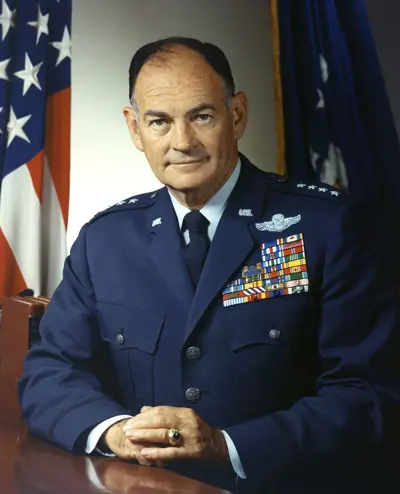
George Scratchley Brown was a United States Air Force general who served as the chairman of the Joint Chiefs of Staff. In this capacity, he served as the senior military adviser to the president of the United States, the National Security Council and the secretary of defense. Through the commanders of the unified and specified commands, he was also responsible for executing the decisions of the National Command Authorities regarding worldwide readiness and employment of combat forces of the United States Army, Navy, Air Force and Marine Corps.
