Albert I Quotes
The mission of colonization cannot be other than a mission of high civilization.
Albert succeeded his dead uncle, Leopold, whose Belgian Congo colonization was particularly rapacious. His statement was a signal that the colonial abuses were to stop.
Albert I, 1875-1934, King of Belgium, Statement at his coronation, December 23, 1909
Sourced by: Eigen's Political and Historical Quotations


Buchanan was then Secretary of State.


In 1898 the President was faced with a great dilemma in the Philippines. Giving the islands back to Spain after the war was unthinkable. Germany and France were waiting to step in. Self government was viewed as impractical, given the state of affairs at the time. The President decided to take the islands.


Even at this early time, it was clear that whites had brought numerous diseases that decimated the Indians. Alcohol and disease killed many more native Americans than all the wars—intertribal and with the whites—ever did. Neolin warned but did not have more than regional influence.

The title of this controversial poem became a rallying cry for imperialists and anti-imperialists both. The imperialists saw it as a justification for expansionism and colonialism—that the white had a moral responsibility to bring civilization to the other races. To the anti-imperialists it was a racist justification for imposing Christian values on the rest of the world which didn’t want them. In the quotation example here, the poem was used to state a dilemma of foreign aid and trying to bring democracy and freedom to the world.
First Published American Indian Author

This statement was widely interpreted to be a statement of Western Christian superiority over the Muslim world.

Mexico was in a chaotic state with the central government not able to control the countries, especially in the North. There were numerous American proposals like this one. See {596782}.


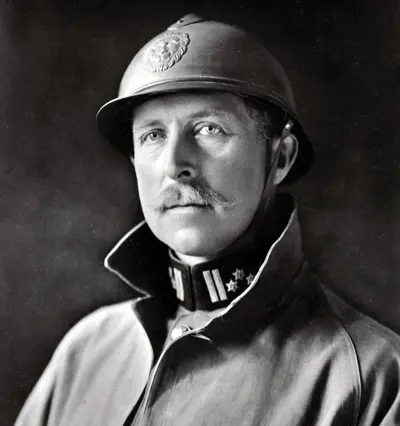
Albert I reigned as King of the Belgians from 1909 to 1934. He ruled during an eventful period in the history of Belgium, which included the period of World War I (1914–1918), when 90 percent of Belgium was overrun, occupied, and ruled by the German Empire. Other crucial issues included the adoption of the Treaty of Versailles in June 1919, the ruling of the Belgian Congo as an overseas possession of the Kingdom of Belgium along with the League of Nations mandate of Ruanda-Urundi, the reconstruction of Belgium following the war, and the first five years of the Great Depression (1929–1934). King Albert died in a mountaineering accident in eastern Belgium in 1934, at the age of 58, and he was succeeded by his son Leopold III (r. 1934–1951). He is popularly referred to as the "Knight King" (roi-chevalier or koning-ridder) or "Soldier King" (roi-soldat or koning-soldaat) in Belgium in reference to his role during World War I.
