Rudyard Kipling Quotes
Take up the White Man's burden— In patience to abide, To veil the threat of terror And check the show of pride; By open speech and simple, An hundred times made plain, To seek another's profit And work another's gain. Take up the White Man's burden— The savage wars of peace— Fill All the mouth of Famine, And bid the sickness cease.
The title of this controversial poem became a rallying cry for imperialists and anti-imperialists both. The imperialists saw it as a justification for expansionism and colonialism—that the white had a moral responsibility to bring civilization to the other races. To the anti-imperialists it was a racist justification for imposing Christian values on the rest of the world which didn’t want them. In the quotation example here, the poem was used to state a dilemma of foreign aid and trying to bring democracy and freedom to the world.
Rudyard Kipling, 1865-1936, British Nobel Laureate in Literature, “The White Man’s Burden”, 1899
Sourced by: Eigen's Political and Historical Quotations

The poem was written to urge the United States to annex the Philippines.


The “We” to which he was referring were the British officials and civil servants who governed all of India as a colony of the British Empire.


The planners of this particular war effort involved many ideologically correct supporters of a neo conservative agenda from the United States and the other Allies more knowledgeable diplomats and military people were kept our of the effort lest they disagree with administration ideology or policy. The result was a very badly mismanaged occupation phase of the war after a very well managed invasion effort.


Hobson, like Mark Twain in America, was a major critic of imperialism.
When the British first colonized South Africa, the area they used was akmost uninhabited or very sparcely so. However, some Black tribes (including the Zulus) were moving from the north and themselves were colonizing or annexing the areas to their kingdom. The British were most interested in Trading so did not have large land asperations. The Dutch white Boer Africanners, in contrast, wanted to farm the lands and use the range for their cattle. They wanted the land. The English policy was that there would be friendly relations with the Black tribes surrounding their Cape Colony and no one should take their land. However the Boers started attacking the Black areas and seizing their farms and villages. At first, the English assumed that the Blacks would easily be able to ward off the invasion as the Afrikanners had no professional troops like the British. However, the neighboring tribes were not very warlike or good fighters. They were being overrun by the Zulus coming from the North and the Boers from the South. The British Government had a real problem in that they would have to have British soldiers fight the white Afrikanners if they wanted to stop the illegal white invasions. This was the root of the Boer War where the British would be fully at war with the Africanners.
Even at this early time, it was clear that whites had brought numerous diseases that decimated the Indians. Alcohol and disease killed many more native Americans than all the wars—intertribal and with the whites—ever did. Neolin warned but did not have more than regional influence.

Commenting on the Mexican War:


Lord Gordon, then a young captain, was posted to China where Lord Elgin had ordered the destruction of the beautiful Chinese Summer Palace in retaliation. Critics such as Strachey saw the intellectual contradiction.


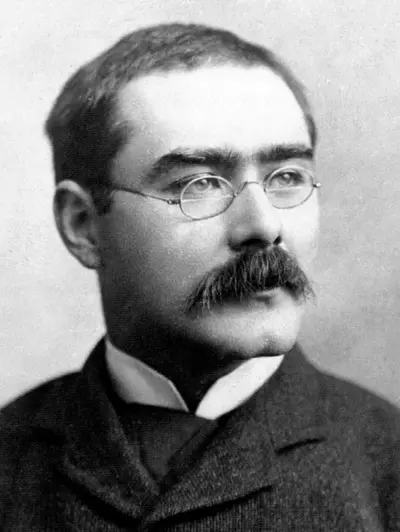
Joseph Rudyard Kipling was an English journalist, short-story writer, poet, and novelist. He was born in India, which inspired much of his work.
