Albert I Quotes
Gentlemen, are you unalterably decided to maintain the sacred gifts of our forefathers?.
The King in his full dress military uniform had raced be carriage with his family to the Parliament building. The Germans had moved troops into Belgium and wanted that country to do nothing while they moved troops to attack France. The emotional question was answered with a shouted unanimous Oui! (Yes!). This meant that the small Belgian army would take on the huge and better equipped German Army and resist the invasion. They hoped for the assistance and intervention of England according to existing diplomatic agreements but they could not be sure. They did get the support of England and France, but later. In the meanwhile, the Germans used the Belgian defense of their land as an excuse for retribution and committing terrible war crimes and atrocities against Belgian military and civilian personnel.
Albert I, 1875-1934, King of Belgium, Question shouted to the Belgian Parliament, 1914
Sourced by: Eigen's Political and Historical Quotations

There were actually very few incidents of civilian resistance to the German invaders and occupiers. However, they were exaggerated and used as a pretext for what amounted to atrocities and war crimes against the Belgian Civilians.
This is the kind of threat that was used by Germany before the First World War. It worked with Turkey, but King Albert realized that being an “ally” of Germany meant losing independence anyway. Belgium would not join Germany, so the Germans invaded Belgium in 1914. Belgians fought with the allies and at the end of WWI, they were able to rebuild their independent state and thrive until they were again invaded by Germany in WWII. Turkey, in contrast, lost their entire empire, as a result of their fighting as German allies in WWI.


This was the classic German method of invading a neutral country. First they claim that they have good information that their enemy, in this case France, is going to March through Belgium to attack Germany. Then they state that the Belgians are too weak to prevent this breach of their neutrality. Therefore, Germany as an act of “self defense” must send troops into Belgium to repel the French. The Belgians of course objected and stated that they would maintain their neutrality (see {613959} ) but the Germans then invaded the next day and could not understand why the world considered it aggression.

He was one of the first democratic politicians of Germany who argued for rapprochement between France and Germany and may have been the first to suggest a European Union. Most of the world was very distrustful of German nationalism, and Stresemann presented one of the positive aspects of it. He died of a stroke in 1929 and the political vacuum was eventually filled by Hitler and the Nazis as the Weimar Republic was short lived. As democratic as Stresemann was, he still was preoccupied with German territorial control. Germany’s aggression in WWI led to a peace treaty that fixed borders that were always contested by Germany. The German position was that if there was an area or France, Poland, or other country where there was a community of German speaking people, then that area should be a part of Germany. This was one of the main reasons for Germany’s aggression on WWII.
1st Viscount Grey of Fallodon. He was advocating British entry into WWI in defense of the Neutrality of Belgium as was their treaty obligation.
1st Viscount Grey of Fallodon. He was advocating British entry into WWI in defense of the Neutrality of Belgium as was their treaty obligation.


There were some anti-war forces in Germany in World War I.
This was sent in response to the German invasion threat {613864}. It did no good as the Germans had already decided to invade Belgium which they did the next day.

After declaring the independence of Rhodesia from British imperial rule:


This quotation is important for two reasons. First, it shows that there was a very hostile environment in Europe well before the assassination of the Archduke of Austria that “triggered” WWI. Second, that the Germans were racist before Hitler ever came on the scene. The Emperor demagogued the issue and took it to new extremes, but the evil was there. To the Germans, the Slavs and Russians were a lesser form of humanity than the Germans. The Austrians were threatening to attack Serbia and Russia. The Austro-Hungarian Empire, ruled many ethnic Slavs, Russians and Muslims—the lower forms of humanity—and long before Hitler, Wilhelm and other leading Germans thought that the Germanic Peoples should rule that part of the world as the lesser “races” were not fit to rule.
The Hapsburgs were the ruling family of the Austrian Empire who wanted to invade Serbia in retaliation for their complicity in the assassination of the Austrian Archduke. This would likely bring Russia in the war in support of Serbia. The editor thought that there was no obligation to support Austria when they were planning a war of choice. What the editor did not know was that the German leadership very much wanted war at the time and supporting Austria was the perfect excuse to fight without them starting the conflict. However, the evidence became clear later than it was German aggression that turned the dispute into a World War.

The Times regretted that the Germans did not speak to the Austrians more vigorously when they were threatening to attack Serbia who harbored anti-Austro-Hungarian terrorists (see {642085}). What the Times editors did not realize was that the Germans had already made their war plans (see {642092}) and the Serbian issue was just the justification they needed to implement them. So there was no real reason for the Germans to discourage the Austro-Hungarian Empire from its mission to punish Serbia.
The German war plan called for attacking France through Belgium. However, Belgium was intent on remaining neutral. International law prohibited a neutral country from allowing troops of either side to enter and maneuver in its territory. The Kaiser and the German leaders know they were violating International law and rationalized it by stating that after they defeated France, they would treat Belgium well.


He always appeared in a military uniform after that.

In both the First and Second World Wars the Western nations had a multilateral defense pact which did little good in the face of German aggression.

This speech to over 100,000 people galvanized the Indian nationalists They had been asking the British to change the constitution to give India more independence. Churchill was opposed to any policy that would diminish the British Empire, but needed the Indians as men of India served in the British Army in every major theater of WWII. So instead of saying "No" Churchill held out the possibility but at a later time. He argued that it was inopportune to alter the Constitution in the midst of a world war.
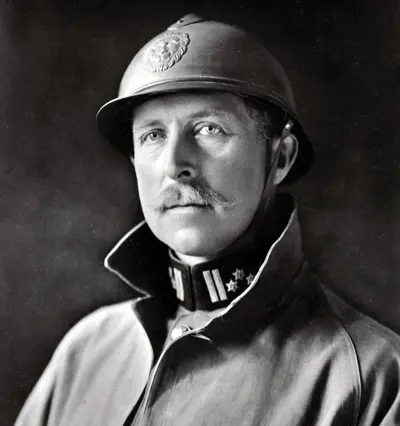
Albert I reigned as King of the Belgians from 1909 to 1934. He ruled during an eventful period in the history of Belgium, which included the period of World War I (1914–1918), when 90 percent of Belgium was overrun, occupied, and ruled by the German Empire. Other crucial issues included the adoption of the Treaty of Versailles in June 1919, the ruling of the Belgian Congo as an overseas possession of the Kingdom of Belgium along with the League of Nations mandate of Ruanda-Urundi, the reconstruction of Belgium following the war, and the first five years of the Great Depression (1929–1934). King Albert died in a mountaineering accident in eastern Belgium in 1934, at the age of 58, and he was succeeded by his son Leopold III (r. 1934–1951). He is popularly referred to as the "Knight King" (roi-chevalier or koning-ridder) or "Soldier King" (roi-soldat or koning-soldaat) in Belgium in reference to his role during World War I.
