Wilhelm II, German Emperor Quotes
We draw the sword with a clear conscious and clean hands! Our invasion of Belgium is contrary to International Law, but this wrong – I speak openly – that we are committing – that we are committing – we will make right as soon as our military objective has been attained.
The German war plan called for attacking France through Belgium. However, Belgium was intent on remaining neutral. International law prohibited a neutral country from allowing troops of either side to enter and maneuver in its territory. The Kaiser and the German leaders know they were violating International law and rationalized it by stating that after they defeated France, they would treat Belgium well.
Wilhelm II, 1859-1941, Emperor of Germany & King of Prussia, Addressing, while he was in full military regalia, the members of the Reichstag [Parliament] who he had summoned to the palace, August 14, 1914
Sourced by: Eigen's Political and Historical Quotations

England is entering the war against Germany The German war plan called for attacking France through Belgium. However, Belgium was intent on remaining neutral. International law prohibited a neutral country from allowing troops of either side to enter and maneuver in its territory. ({642178}). When Germany moved into Belgium, the Belgians resisted. England had a treaty with Belgium that it would protect Belgian neutrality in the event of any war in Europe. England then sided with Belgium {642175} and committed to send troops to help Belgium oust the Germans. The Kaiser was furious and could not understand that the English would go to war when there was no economic need or advantage for them to do so. Wilhelm II did not have much respect for treaties, promises, or honor other than military honor. He had earlier convinced himself that the English would not fight for a scrap of paper, especially in a land war. {642105}


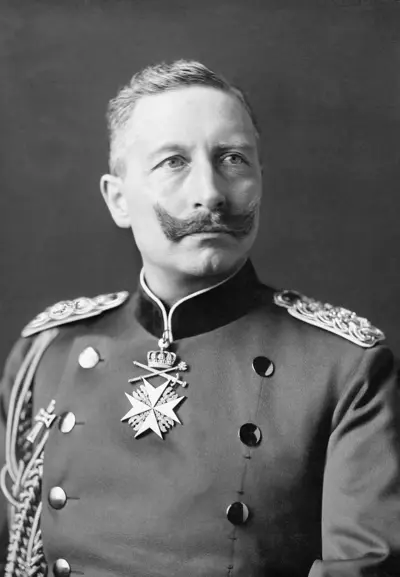
- Born: January 27, 1859
- Died: June 4, 1941
- Nationality: German
- Profession: Statesman
Wilhelm II, anglicised as William II, was the last German Emperor (Kaiser) and King of Prussia, reigning from 15 June 1888 until his abdication on 9 November 1918. Despite strengthening Germany's position as a great power by building a blue-water navy and promoting scientific innovation, his tactless public statements greatly antagonized the international community and his foreign policy was seen by many as one of the causes for the outbreak of World War I. When the German war effort collapsed after a series of crushing defeats on the Western Front in 1918, he was forced to abdicate, thereby bringing an end to the three-hundred-year rule of the House of Hohenzollern.
