William Safire Quotes
Today, war of necessity is used by critics of military action to describe unavoidable response to an attack like that on Pearl Harbor that led to our prompt, official declaration of war, while they characterize as unwise wars of choice the wars in Korea, Vietnam and the current war in Iraq.
Safire, William. "On Language; War of Choice." The New York Times Magazine, The New York Times Company, 10 Oct. 2004, p. 22.


Actually, the two world wars were wars of necessity. The Korean War and the Vietnam war are considered by many as wars of choice. But most of our military incursions—the Mexican War, the Spanish American War, Grenada, the Serbian War, Hati incursions and many others were wars of choice for which there were often very good reasons. However, we have to go to war when America is existentially threatened. In that sense, the Iraq War which Kerry was primarily addressing, could be interpreted either way. If it was really true thread. That is what caused most members of Congress to vote to approve the war. However, when that turned out to have been untrue, and it was suspected that the weapons of mass destruction was a deliberate ruse by some.


The highest court in New York. Kent did not originate this concept. He was stating an age old principle of law: Posse vicinum impediri, ne in suo solo, sine alia causa suaque evidenti utilitate, munimentum nobis propinquum extruat, aut aliud quid faciat, unde justa formido periculi oriatur.


The Germans wanted war with Serbia and used the dispute between Austria and Serbia as an excuse to mobilize and go to war ostensibly to protect their ally, the Austrian Empire, from the Serbs who they knew would be likely supported by Russia which had traditionally supported their fellow Eastern Orthodox against Roman Catholic or Protestant enemies. Russia still tends to protect and support the Serbs. This statement was one of the many that showed that Germany was the major aggressor in the First World War and therefore had to pay reparations to France and others.

Podharetz was citing the Vietnam war. The two American occasions where the plausibility seemed to fade were the Vietnam War and The Irag war. Both Presidents Lyndon Baines Johnson and George W. Bush as Bismarck predicted, had much political trouble over the wars.

English law and United States law are different. The George W, Bush administration has argued that regime change—removing Sadaam Hussein from power and control of Iraq—would be legal under U. S. law. This belief was never tested in the American Courts during the Iraq War.
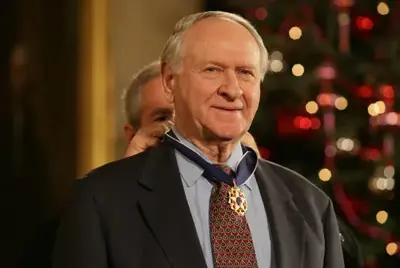
William Lewis Safir, better known as William Safire (/ˈsæfaɪər/), was an American author, columnist, journalist, and presidential speechwriter. He was a long-time syndicated political columnist for The New York Times and wrote the "On Language" column in The New York Times Magazine about popular etymology, new or unusual usages, and other language-related topics.
