James Kent Quotes
A rational fear of an imminent danger is said to be a justifiable cause of war.
The highest court in New York. Kent did not originate this concept. He was stating an age old principle of law: Posse vicinum impediri, ne in suo solo, sine alia causa suaque evidenti utilitate, munimentum nobis propinquum extruat, aut aliud quid faciat, unde justa formido periculi oriatur.
James Kent, 1763-1847, Chief Justice of the New York State Court of Appeals Chancellor of New York State, Lectures in Law, Of The Rights And Duties Of Nations In A State Of Peace
Sourced by: Eigen's Political and Historical Quotations

Actually, the two world wars were wars of necessity. The Korean War and the Vietnam war are considered by many as wars of choice. But most of our military incursions—the Mexican War, the Spanish American War, Grenada, the Serbian War, Hati incursions and many others were wars of choice for which there were often very good reasons. However, we have to go to war when America is existentially threatened. In that sense, the Iraq War which Kerry was primarily addressing, could be interpreted either way. If it was really true thread. That is what caused most members of Congress to vote to approve the war. However, when that turned out to have been untrue, and it was suspected that the weapons of mass destruction was a deliberate ruse by some.


Although Great Britain had abolished slavery, British economic interests during the Civil War suffered because of the northern blockade of the South. Much political opinion in England was hostile to the blockade policies of the Union. Bright, a great admirer and supporter of the United Sates and the Union cause was concerned that the United States might drift into War with Great Britain. His letter to Senator Sumner was written with the understanding that it would be in shared with President Lincoln, and it was actually read at a cabinet meeting.


This was written when the United States was not a dominant military power. At the beginning of the 20th century, the U. S. had the same size military as Argentina. It was France, German, Turkey and England who had the military superiority and it was they who tended to find excuses for war. After WWII, the U. S. was dominant and was involved with a number of wars and military incursions, often with nations that had not attacked the U.S. Korns’ principle was most dramatic when the George W. Bush administration invaded Iraq on the excuse that the Iraqis were developing weapons of mass destructions and then might attack the United States. After the successful invasion, the excuse was shown to be hollow as there were no signs of sophisticated weapons development.


The English were at War with Napoleon and Denmark was neutral. British leaders feared that Denmark might either ally themselves with Napoleon or provide him with ships from their well equipped fleet. The English decided on a preemptive attack on Denmark and Paget and other Captains were ordered to Denmark. When they arrived they were ordered to bombard Copenhagen and force the Danes to surrender. When this happened, the British seized the Danish ships and simply took them as war prizes. The issues of the morality and wisdom of preemptive attacks, as with the Americans in the Iraq war, was thoroughly debated but the government view prevailed to the shame of most Englishmen.


Hitler ridiculed the letter after receiving it in public speech.

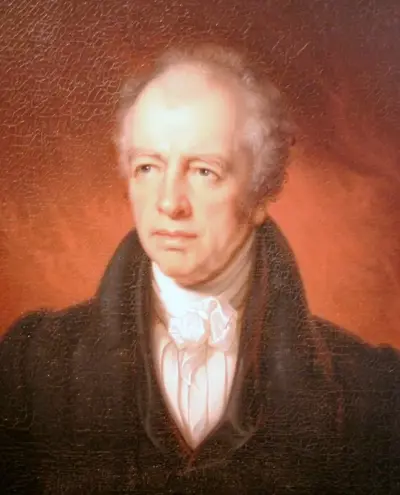
James Kent was an American jurist and legal scholar. He was the author of Commentaries on American Law.
