Henry Clay Quotes
It is not every cause of war that should lead to war.
Henry Clay, 1777-1852, U.S. Congressman and Senator (KY), Speaker of the House, U.S. Secretary of State, House Debate, March 24, 1818
Sourced by: Eigen's Political and Historical Quotations


Podharetz was citing the Vietnam war. The two American occasions where the plausibility seemed to fade were the Vietnam War and The Irag war. Both Presidents Lyndon Baines Johnson and George W. Bush as Bismarck predicted, had much political trouble over the wars.


At a requiem for those who died on the battleship Maine, Gibbons criticized war mongering yellow journals. This was a very courageous statement to have made. The Hearst newspaper had fired up the American appetite for revenge and almost all the politicians were advocating war. At the time anti-Catholicism in America was extensive and Catholics were always being accused of not being patriotic Americans and more loyal to the Vatican than to the United States.

The highest court in New York. Kent did not originate this concept. He was stating an age old principle of law: Posse vicinum impediri, ne in suo solo, sine alia causa suaque evidenti utilitate, munimentum nobis propinquum extruat, aut aliud quid faciat, unde justa formido periculi oriatur.

At the time of this speech virtually the entire world believed that. However world attitude changed markedly after the administration of George W. Bush and the United States invasion of Afghanistan after September 11 and the Iraq War which was for regime change.


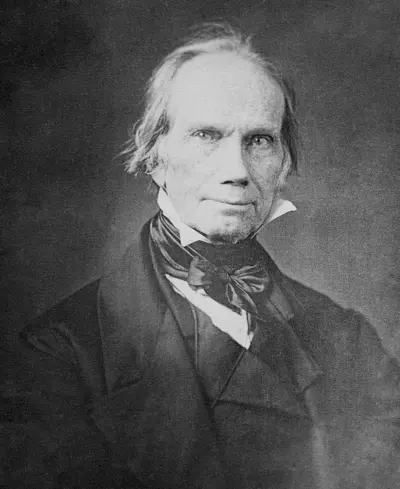
Henry Clay Sr. was an American attorney and statesman who represented Kentucky in both the Senate and House. He was the seventh House Speaker and the ninth Secretary of State. He received electoral votes for president in the 1824, 1832, and 1844 presidential elections. He also helped found both the National Republican Party and the Whig Party. For his role in defusing sectional crises, he earned the appellation of the "Great Compromiser" and was part of the "Great Triumvirate".
