Ludwig Quidde Quotes
Lightly armed nations can move toward war just as easily as those which are armed to the teeth, and they will do so if the usual causes of war are not removed.
Quidde, Ludwig. "Security and Disarmament." 12 Dec. 1927, Oslo, Norway. Nobel Lectures, Peace 1926-1950, edited by Frederick W. Haberman, Elsevier Publishing Company, 1972.


There were many who thought that the Russians would view the Mutual Security Act as aggressive and they might respond with some kind of aggressive retaliation and this could lead to war. Others felt that containment would reduce the likelihood of war.

Although Great Britain had abolished slavery, British economic interests during the Civil War suffered because of the northern blockade of the South. Much political opinion in England was hostile to the blockade policies of the Union. Bright, a great admirer and supporter of the United Sates and the Union cause was concerned that the United States might drift into War with Great Britain. His letter to Senator Sumner was written with the understanding that it would be in shared with President Lincoln, and it was actually read at a cabinet meeting.


At that time there were extensive meetings and discussions for the creation of what was to be the United Nations. The negative view of the United Nations or other international security organization is now and always has been held by a vocal minority in the United States.


This was written when the United States was not a dominant military power. At the beginning of the 20th century, the U. S. had the same size military as Argentina. It was France, German, Turkey and England who had the military superiority and it was they who tended to find excuses for war. After WWII, the U. S. was dominant and was involved with a number of wars and military incursions, often with nations that had not attacked the U.S. Korns’ principle was most dramatic when the George W. Bush administration invaded Iraq on the excuse that the Iraqis were developing weapons of mass destructions and then might attack the United States. After the successful invasion, the excuse was shown to be hollow as there were no signs of sophisticated weapons development.


Actually, the two world wars were wars of necessity. The Korean War and the Vietnam war are considered by many as wars of choice. But most of our military incursions—the Mexican War, the Spanish American War, Grenada, the Serbian War, Hati incursions and many others were wars of choice for which there were often very good reasons. However, we have to go to war when America is existentially threatened. In that sense, the Iraq War which Kerry was primarily addressing, could be interpreted either way. If it was really true thread. That is what caused most members of Congress to vote to approve the war. However, when that turned out to have been untrue, and it was suspected that the weapons of mass destruction was a deliberate ruse by some.


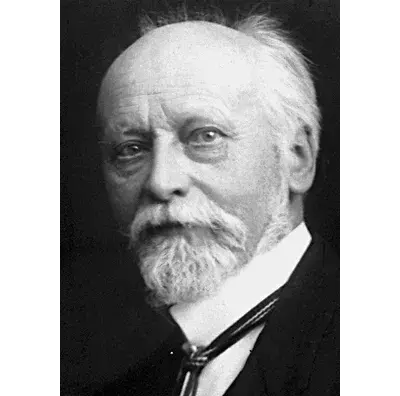
Born into a wealthy bourgeois merchant family, Quidde grew up in Bremen, read history and also got involved in the activities of the German Peace Society (Deutsche Friedensgesellschaft). In his younger years he had already opposed Bismarck's policies. In 1881 he received his PhD at the University of Göttingen. In 1894 Quidde published a 17-page pamphlet entitled Caligula. Eine Studie über römischen Caesarenwahnsinn (Caligula: A Study of Imperial Insanity). Containing 79 footnotes, the short essay is exclusively about the Roman Empire of the 1st century AD. However, Quidde drew an implicit parallel between the Roman Emperor Caligula and Wilhelm II, de facto accusing both rulers of megalomania. The author had insisted on publishing his pamphlet under his real name, which effectively ended his academic career as a historian when, in some periodical, a short review explained the parallels which otherwise might have gone unnoticed. After he made a derogatory comment on a new medal in honour of William I, German Emperor, German Emperor from 1871 to 1888, he was criminally convicted of lèse majesté, and sentenced to three months in prison, which he served in Stadelheim Prison.
