George Santayana Quotes
Loyalty to our ancestors does not include loyalty to their mistakes.
George Santayana, 1863-1952, Philosopher, Quoted by the Chicora Foundation, www.chicora.org, September 21, 2006
Sourced by: Eigen's Political and Historical Quotations


He and Thomas Jefferson were the two most vocal propononents of this view amongst the Founding Fathers.


See Thomas Paine for a contemporary similar view and Auguste Comte for an earlier statement of the consequences of the contrary.


Samuel Langhorne Clemens, 1835-1910

The King in his full dress military uniform had raced be carriage with his family to the Parliament building. The Germans had moved troops into Belgium and wanted that country to do nothing while they moved troops to attack France. The emotional question was answered with a shouted unanimous Oui! (Yes!). This meant that the small Belgian army would take on the huge and better equipped German Army and resist the invasion. They hoped for the assistance and intervention of England according to existing diplomatic agreements but they could not be sure. They did get the support of England and France, but later. In the meanwhile, the Germans used the Belgian defense of their land as an excuse for retribution and committing terrible war crimes and atrocities against Belgian military and civilian personnel.

Yet so many nations and cultures carry the baggage of historical deeds or misdeeds do their detriment, while others take great pride in accomplishments which they themselves have had nothing to do with. The middle ground is to understand and appreciate (or condemn if warranted) the historical contibution to the present of ancenstors and avvoid hubris for others actions and avoid the need to be defensive and justify or deny other ancensoral behavior.


The Bushmen are of the indigenous people of Botswana who have only had extended contact with the larger world recently.
Samuel Langhorne Clemens, 1835-1910


This statement is very revealing in that it illustrates the attitude of the establishment of most developing nations. Traditional change is OK as long as it is not does transformational—ie as long as it does not make any meaningful changes. But modernization requires transformational change; without it there is no major reform and all institutions and power structures remain in their positions.


Many conservatives of the 19th Century honestly believed that for a well-grounded man, it was impossible to make a radical moral or cultural change. Froude thought that it was but should be done very carefully and sparingly. See {636915}.
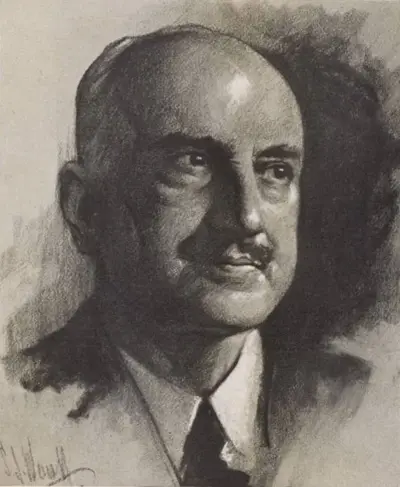
Jorge Agustín Nicolás Ruiz de Santayana y Borrás, known in English as George Santayana, was a philosopher, essayist, poet, and novelist. Originally from Spain, Santayana was raised and educated in the US from the age of eight and identified himself as an American, although he always retained a valid Spanish passport. At the age of 48, Santayana left his position at Harvard and returned to Europe permanently.
