Weng Tonghe Quotes
When the envoys of Western countries come to the foreign office, they no longer behave in a courteous manner; they shout abuse at the drop of a hat.
China had not strengthened is military as Empress Cixi had desired--{641697}. The result was a very weak country that other nations took advantage of and bullied their way to the most extraordinary concessions. This in turn, made the foreign diplomats lose respect for the Chinese officials with whom they dealt and many were treated with disrespect and abuse—like servants. This outraged influential, traditional, conservatives like Weng and began to develop the foundation of the anti-Western Boxer Movement in China.
Weng Tonghe, 1830–1904, Chinese Confucian scholar and imperial tutor, Minister of Revenue, Director of the Censorate, Member of the Grand Council, 1895
Sourced by: Eigen's Political and Historical Quotations


In 1904 the Archduchess of Austria was visiting the Adriatic port of Fiume where hundreds of immigrants to America were waiting to board the ship. The nobility of the time found amusement in the poor immigrants boarding with their meager possessions and poor clothes. The Archduchess wanted the people to board 3 days early so she could watch the spectacle before she left. They would then have to stay in the steerage of the ship for 3 extra days. The American consul refused to issue the necessary papers until just before the sailing:


Shariatmadari sometimes serves as a spokesman for major Religious officials of the Iranian theocracy. This quotation is particularly interesting as it illustrates a particular world view of some Iranian leaders that makes it almost impossible to cope with problems through diplomatic means. The argument is that if Iran negotiates with America on any issue, Iran would be a poor example to other Islamic nations because they would conclude that Iran and all Muslim countries had no choice but get along with America. The idea that negotiating with a nation means that a country is “getting along” with the other country is of course the absurdity. But it is believed by many in the Muslim world. Ironically that same view is held by “hard liners” in America and most other countries in addition to Iran. There are Americans who do not believe that we should negotiate with Iran at all because the negotiations gives them a status that they do not deserve. And it connotes a level of approval by America of Iran just to talk with them.

At the time Japan had a strong Fascist military wing and the army was not under the control of the civilian government. The government diplomats were less aggressive and expansionist as the military was. The Japanese diplomats would assure other governments like the United States of their peaceful intentions and then the Japanese army would do something that was completely contradictory. As the militarist wing gained domination over the government, the diplomats would strategically lie, and then claim what whatever the army did, was done be rogue officers and was not part of government policy.


The practice became extensively used and the phrase along with it during the William Howard Taft administration where the media popularized it.

Russia was the only source of arms for the beleaguered Republicans. Stalin used that position to dictate policies to the Spanish Republicans and sent his ambassador to relay his demands to the Spanish Prime Minister. Largos Caballero would not even let him see the Prime Minister. Although this behavior was extremely impractical and hurt the Republican cause, the Prime Minister and just about all the Republicans agreed with the Ministers reaction.


“Dey” and “bey” were Arabic terms for the local ruler of an area.


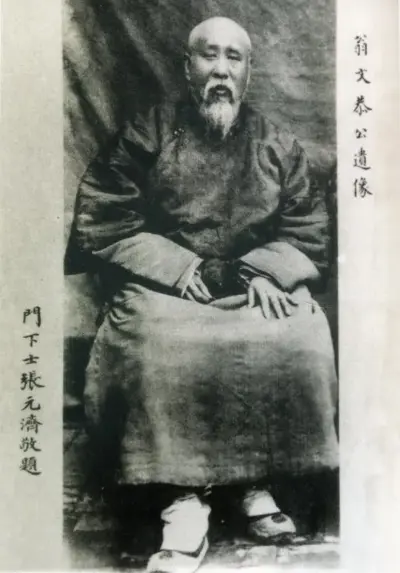
Weng Tonghe (Chinese: 翁同龢; pinyin: Wēng Tónghé; Wade–Giles: Weng T'ung-ho; 1830–1904), courtesy name Shuping (叔平), was a Chinese Confucian scholar and imperial tutor who lived in the Qing dynasty. In 1856, he obtained the position of zhuangyuan (or top scholar) in the imperial examination and was subsequently admitted to the prestigious Hanlin Academy.
