Henry L. Stimson Quotes
…I am getting very tired of being reassured one thing by the Japanese Foreign Office and then having the army go ahead and do the opposite.
At the time Japan had a strong Fascist military wing and the army was not under the control of the civilian government. The government diplomats were less aggressive and expansionist as the military was. The Japanese diplomats would assure other governments like the United States of their peaceful intentions and then the Japanese army would do something that was completely contradictory. As the militarist wing gained domination over the government, the diplomats would strategically lie, and then claim what whatever the army did, was done be rogue officers and was not part of government policy.
Henry L. Stimson, 1867-1950, U. S. Secretary of State (Republican), U. S. Secretary of War, Governor General, Philippine Islands, November 1931
Sourced by: Eigen's Political and Historical Quotations

At the time Japan had a strong Fascist military wing and the army was not under the control of the civilian government. The government diplomats were less aggressive and expansionist as the military was. The Japanese diplomats would assure other governments like the United States of their peaceful intentions and then the Japanese army would do something that was completely contradictory. As the militarist wing gained domination over the government, the diplomats would strategically lie, and then claim what whatever the army did, was done be rogue officers and was not part of government policy. See {627085}.


Some people believe that the United States pressured Pakistan to enable America to support the Mujahideen in their effort to fight the Russian occupation of Afghanistan. Actually the President (and virtual dictator) of Pakistan wanted aid from America and was offering bases. America did not want bases but did want a platform for arming and training the Mujahideen, Pakistan allowed us to use Pakistan as a platform. We increased our foreign aid to Pakistan by 500 percent. There was no arm twisting.

The “proofs” were diplomatic assurances—treaties—that England would guarantee the territorial integrity of Belgium. The British made strong diplomatic efforts to persuade Germany not to occupy Belgium. The German’s none the less send armies in under the excuse that if they did not, the French would occupy the country and have a strategic advantage over them. Diplomacy could do no more good. England had to send troops or renege on its obligations. So England was in WWI.


In 1904 the Archduchess of Austria was visiting the Adriatic port of Fiume where hundreds of immigrants to America were waiting to board the ship. The nobility of the time found amusement in the poor immigrants boarding with their meager possessions and poor clothes. The Archduchess wanted the people to board 3 days early so she could watch the spectacle before she left. They would then have to stay in the steerage of the ship for 3 extra days. The American consul refused to issue the necessary papers until just before the sailing:

She was the first person in this newly created post.


Iraq’s program of mass destruction weapons development


Barry Goldwater in the 20th century used a variation of this quotation. See {601784}.


Germany had demanded that Belgium allow German troops to cross Belgium to the French frontier. However, King Albert was concerned that this would be a de facto German occupation of Belgium and asked for help. The British tried diplomacy but things were out of anyone’s control and the First World War ensued.


sending American troops to Vietnam


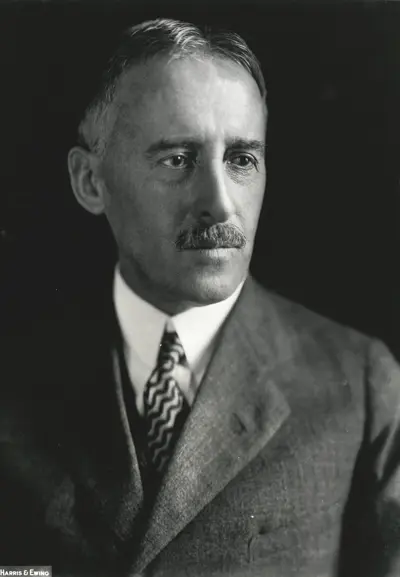
- Born: September 21, 1867
- Died: October 20, 1950
- Nationality: American
- Profession: Statesman
Henry Lewis Stimson was an American statesman, lawyer, and Republican Party politician. Over his long career, he emerged as a leading figure in U.S. foreign policy by serving in both Republican and Democratic administrations. He served as Secretary of War (1911–1913) under President William Howard Taft, Secretary of State (1929–1933) under President Herbert Hoover, and Secretary of War (1940–1945) under Presidents Franklin D. Roosevelt and Harry S. Truman.
