Ambrose Bierce Quotes
When in the course of European diplomacy it becomes necessary for one people to let another dissolve the political bands which have connected them with a third, and to assume among the powers of the earth the desperate and unequal station to which the will of an International Congress condemns them, a decent respect to the cannon of their protectors requires that they should say nothing about the causes which compel them to accept the situation.
Ambrose Bierce, 1842-1914?, Journalist & Political Columnist, Argonaut, August 10, 1878
Sourced by: Eigen's Political and Historical Quotations

In 1884 Germany had become active in its colonization and outmaneuvered England in taking over Cameroon. Then Germany showed some interest in a part of New Guinea. The English resisted, not for any geopolitical reasons but because the British leaders did not want to be bested by Bismarck.

The basic treaty sold some of Ethiopia’s colonial territory (Eritrea and Tigray) to Italy in exchange for arms. Italy had tried to conquer the area but lost 500 men in the Battle of Dogali. However, after this peace treaty, Italy maintained that Article 17 of the treaty gave them the right to declare Ethiopia an Italian Protectorate which they did. However, there were two different versions of the treaty that the Italians had drawn up—one in Italian, the other in Aramaic. Britain, Belgium and Germany supported Italy; France, Turkey and Russia supported Ethiopia. Menelik then, to make matters clear, repudiated the treaty in 1893. Italy send an invasion force that was soundly thrashed by the Ethiopians setting the stage for the Italian attack on Ethiopia in World War II years later. Parties to International treaties thereafter have paid close attention to the different language versions.

In 1904 the Archduchess of Austria was visiting the Adriatic port of Fiume where hundreds of immigrants to America were waiting to board the ship. The nobility of the time found amusement in the poor immigrants boarding with their meager possessions and poor clothes. The Archduchess wanted the people to board 3 days early so she could watch the spectacle before she left. They would then have to stay in the steerage of the ship for 3 extra days. The American consul refused to issue the necessary papers until just before the sailing:


The “proofs” were diplomatic assurances—treaties—that England would guarantee the territorial integrity of Belgium. The British made strong diplomatic efforts to persuade Germany not to occupy Belgium. The German’s none the less send armies in under the excuse that if they did not, the French would occupy the country and have a strategic advantage over them. Diplomacy could do no more good. England had to send troops or renege on its obligations. So England was in WWI.


England in this quotation claims the right to interfere in the internal affairs of another nation if there is mismanagement or crises AND her national interests are affected.


With promises the success lies in following through and keeping the promise which is usually very costly. A threat that fails meanwhile can be the most expensive thing. We make a threat to deter a foreign power from something. Failure occurs when they are not intimidated and go ahead anyway. Then if we follow through on the threat, that is very costly—a war, a trade embargo, or whatever. Not following through on the threat is the costliest of all as we lose our credibility, trust and honor.

Diplomatic recognition of the People’s Republic of China was being debated. Many of Churchill’s Conservative Party Colleagues were opposed on the grounds that diplomatic relations gives a signal of legitimacy. In the U. S. this general issue is a constant source of political controversy when diplomatic relations and talks are considered with Iran, Cuba and North Korea.

Misha Saakashvili, the President of Georgia, the ex-Soviet State, had a good bit of support in American political circles and decided to start a military conflict with Russia attacking a disputed area whose people had rejected Georgia and preferred the Russian affiliation and control. He was confident that the US would protect him from major retaliation. The Russians first moved troops into the attacked area and then started attacking Georgia military assets. Rice and the Russian Foreign minister were negotiating a cease fire on which they agreed to details and were going to impose them on Georgia. However, Lavrov demanded that Georgia President Saakashvili be deposed. Either nation had the power to do this, and both had in many past instances deposed or overthrown the leaders of other nations—democratically elected or not. This quote is very interesting because in this particular case the United States was stating its idealistic policy and not its “real-politic: that it exhibited in helping to bring down and depose democratically elected in Iran, Chile, Vietnam, Venezuela, Haiti, and others. Ironically, there were many in the US who wanted Saakashvili deposed for unilaterally starting a military conflict Russia that had to involve the U. S.


You simply do not do that to a head of a democratic state wanting to cross [fly] over your airspace.
American (traitor of whistleblower depending on who is judging) Edward Snowden was in the Moscow International Airport seeking political asylum from several nations. The United States, wanting to extradite and try Snowden criminally had “intelligence” that Snowden was going to fly out of Russia in the private plane of Bolivian President Morales. The U.S. persuaded the European countries to refuse his plan “flyover” rights—usually a formality that is always granted for a foreign head of state. This forced Morales to land his plane for refueling in Austria where, under pressure from the United States, Austrian law enforcement officials boarded and searched the plane—something that is almost never done to a plane that is just refueling, much less the airplane of a head of state. The Secretary General was expressing the outrage of the OAS nations (and many others around the world). What made the situation even more embarrassing for the United States, Austria, and the other European nations which did not grant flyover rights, was the fact that the U. S. Intelligence was totally wrong. Snowden was not on the plane forcing the Austrians who had technically committed an act of war against Bolivia by forcing their way onto a Bolivian plane carrying diplomats and the president of Bolivia, to apologize. Snowden was still in Russia, and the Russians then gave him political asylum in large part because they too resented the behavior of Austria, Europe and above all the United States in the Bolivian plane incident as the pane had taken off from Moscow. This was a very difficult call for the American intelligence agencies, in that there may well have been a plan to put Snowden in that plane that was cancelled when it was clear that the Americans would try and intercept the plane somehow. The OAS and other complaining nations argued that even if Snowden had been on the plane, there was no right to intercept and search the plane anyway.

“Dey” and “bey” were Arabic terms for the local ruler of an area.


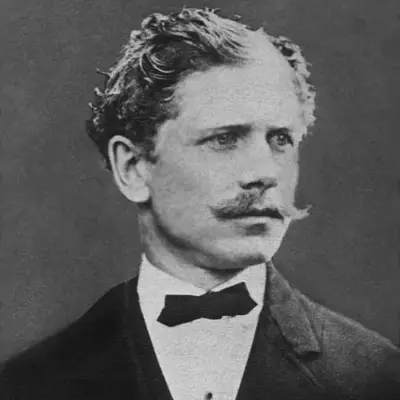
Ambrose Gwinnett Bierce was an American short story writer, journalist, poet, and Civil War veteran. His book The Devil's Dictionary was named as one of "The 100 Greatest Masterpieces of American Literature" by the American Revolution Bicentennial Administration. His story "An Occurrence at Owl Creek Bridge" has been described as "one of the most famous and frequently anthologized stories in American literature"; and his book Tales of Soldiers and Civilians (also published as In the Midst of Life) was named by the Grolier Club as one of the 100 most influential American books printed before 1900.
