Henry Clay Quotes
A rigid, fanatic, ambitious, selfishly partisan and sectional turncoat with too much genius and too little common sense, who will either die a traitor or a madman.
Referring to John C. Calhoun:
Henry Clay, 1777-1852, U.S. Congressman and Senator (National Republican & Whig, KY), Speaker of the House, U.S. Secretary of State, Unsuccessful presidential candidate, Remark
Sourced by: Eigen's Political and Historical Quotations


In 1904 President Theodore Roosevelt instructed his Attorney General to file one of America’s first and the largest anti-trust case against Northern Securities Company. The President was a Republican and a patrician. Most of his social acquaintances and a few friends were totally surprised that the President could turn against his own class in what they saw as an act of class warfare. They sought explanations for the unthinkable.


Referring to political columnist Drew Pearson:

Marshall was one of the greatest soldiers who ever served America. He was the Chief of Staff throughout the Second World War and then served as Secretary of State. It was he who devised and implemented the Marshall Plan. McCarthy accused thousands of people of being disloyal including Marshall. He claimed to have lists of communists in the Army and other agencies of government, but never produced such lists. In addition to being a overbearing demagogue, he suffered (and died from) from a serious case of alcoholism. McCarthy’s false and irresponsible attacks eventually caused the Senate to censure him. That and his drinking destroyed his career. Marshall is remembered as one of America’s great figures.


Pound was not only an admirer of Mussolini and Fascism, but actually was a traitor and became a propagandist for the Axis in WWII. At his treason trial after the war, he had a breakdown and was committed to a mental hospital as he was not fit to stand trial. He was hospitalized for 12 years.

1st Marquis of Peña Plata

The event that triggered the call was President Lyndon Johnson introducing the Voting Right Act. Russell had been a mentor to the young Johnson, a fellow Southerner who had voted against and blocked all civil rights legislation when he was in the House and Senate. However when he became President, his representation changed and he reverted to his pre-political views. {637651}


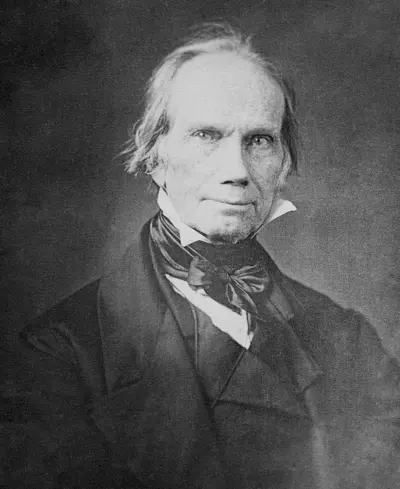
Henry Clay Sr. was an American attorney and statesman who represented Kentucky in both the Senate and House. He was the seventh House Speaker and the ninth Secretary of State. He received electoral votes for president in the 1824, 1832, and 1844 presidential elections. He also helped found both the National Republican Party and the Whig Party. For his role in defusing sectional crises, he earned the appellation of the "Great Compromiser" and was part of the "Great Triumvirate".
