RICHARD B. RUSSELL JR.
(Richard Brevard Russell Jr.)
He was right. Even the vaunted Southern Filibuster was broken by the strategy and tactics Johnson and Senator Humbert Humphry, the Floor Leader for the 1964 Civil Rights Bill.
Russell like the rest of the Southern Congressional delegation, though members of the President’s own party were vehemently opposed to any civil rights legislation that would erode the legal racism and segregation that was prevalent in the South. The irony of Russell’s statement is that by Russell’s definition of a “mongrel race” the South was just that. And in a very real genetic sense all the great civilizations were characterized by interbreeding which is what Russell and other Southerners were paranoid about. The Southern institution of slavery was rife with the sexual abuse of the female slaves by the white masters and/or members of their family, overseers and other whites with power over the slaves. While many of the offspring were identifiable as mixed race (defined as Black by the laws at the time) many appeared to be white and light skinned enough to “pass” and did. A very large percentage of Southern white and black families had mixed blood in the family when Russell was complaining. More to the point, although it was not known at the time, we now know that every human being on earth can be genetically traced back through myocardial DNA to Blacks emanating from Africa. However, even using his narrow vision of race, his history was wanting. A number of great civilizations were of mixed race. One dramatic example was the great dynasties of Egypt. Cleopatra, herself, was from the union of Alexander the Great’s Greek General Ptolemy and the traditional line of Egyptian Pharos. Alexander’s Greek Soldiers interbred, as part of Alexander’s policy of occupation as suggested by Aristotle. All those societies thereafter were “mongrel” races at least in the ruling and upper classes. Actually the United States and the Soviet Union, the two super powers of the day both were ethnically and racially, highly diversified and both had a great deal of miscegenation. Scientists had made a very good argument that miscegenation strengthens a people—not weakens it.
The event that triggered the call was President Lyndon Johnson introducing the Voting Right Act. Russell had been a mentor to the young Johnson, a fellow Southerner who had voted against and blocked all civil rights legislation when he was in the House and Senate. However when he became President, his representation changed and he reverted to his pre-political views. {637651}
The Civil Rights Act of 1964 This is a classic example of a twisted logic what was used for many years in the 20th century Red Scare in America. The International Communist Party was critical of the United States legal racial segregation as it was one of the great weaknesses of U. S. Capitalism for most people in the world. The American Communist party also echoed the party line. Almost all socialist organizations supported the Civil Rights Bill as well. Therefore argued Russell and most Southerners, it should be opposed as a Communist effort to weaken America. What they did not mention was that the majority of Democrats and Republicans supported the bill. That the vast majority of all the American churches and other religious organizations supported the bill, that Business groups all across the country wanted legal segregation ended. The only reason there was a long debate is that the Southerners used the filibuster where a small minority could block Senate legislation. But the American majority was so great for civil rights that the filibuster was defeated and the law passed which changed America forever.
This quotation is important for two reasons. First, it shows how important the clergy of the nation were in calling for the passage of the bill. Second, it illustrates the total blind spot that Southern leaders had on the Segregation issue. It never occurred to Russell and many other Southerners that discrimination and denial of civil rights WAS a moral issue. They saw it purely as political.
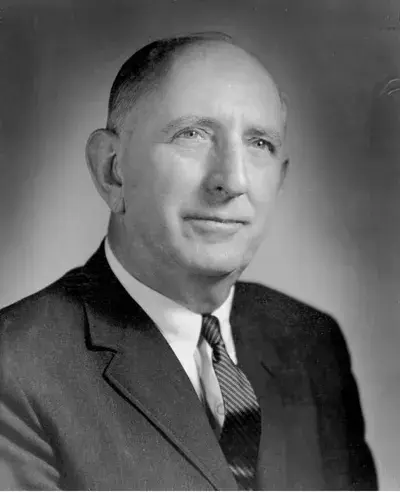
Richard Brevard Russell Jr. was an American politician. A member of the Democratic Party, he served as the 66th Governor of Georgia from 1931 to 1933 before serving in the United States Senate for almost 40 years, from 1933 to 1971. Russell was a founder and leader of the conservative coalition that dominated Congress from 1937 to 1963, and at his death was the most senior member of the Senate. He was for decades a leader of Southern opposition to the civil rights movement.
