Richard B. Russell Jr. Quotes
If we have to start over again with another Adam and Eve, I want them to be Americans, not Russians.
Richard B. Russell Jr., 1897-1971, U. S. Senator (Democrat, GA), Senate Debate, October 2, 1968
Sourced by: Eigen's Political and Historical Quotations


Statement to Secretary of State Dean Rusk just after they had been given a military briefing on every Russian city that would be wiped out with a nuclear bomb if war should break out, 1961.

No one knows whether or not Castro was really sincere in making this offer. The Russians rejected it of course. If they made a first strike on the United States, Russia would have been crippled completely by the retaliation, and they knew it. Castro knew that they knew it and might have been counting on the fact that the Russians would reject his heroic offer. Alternatively, he may have been enough of a fanatic to sacrifice his own life that that of every single Cuban.


One new danger that nuclear powers add to the usual problems of conflict, is that a nuclear power, about to lose a war in a humiliating way, might just use his nuclear weapons in revenge. So much damage will be done that the victory turned out to have been a bad thing. So ironically, with a nuclear enemy. Your military dare not win to dominantly with conventional weapons.

Ironically, at the time she wrote this column, Mrs. Roosevelt was being accused of being a communist by some Southerners who associated her strong views against racism and segregation. Some in the North thought she was a communist because of her active role in the New Deal, Yet here she was, willing to use military force to prevent Soviet expansion.


His wife also had a Doctorate in Chemistry—the 2nd woman to achieve that in Germany—and she was distraught that he had been the leading scientist developing not only the poison gas which the Germans introduced in WWI, but he also developed the tactics of use and personally went to the battlefield and supervised the first major gas attacks. This was much against the ethical value of most scientists and Jewish ethics in particular. Haber had been a close colleague of Albert Einstein and the Kaiser Wilhelm Institute, and while Einstein was trying to get scientists to sign a petition against the war, Haber was developing the first weapon of mass destruction. After Haber gave this response to his wife, we left to go to the front to supervise another major gas attack. His wife committed suicide. Haber, while a German national hero to militaristic Germany, never again had the kind of pre-war relationship that existed with Einstein and many other fellow scientists.

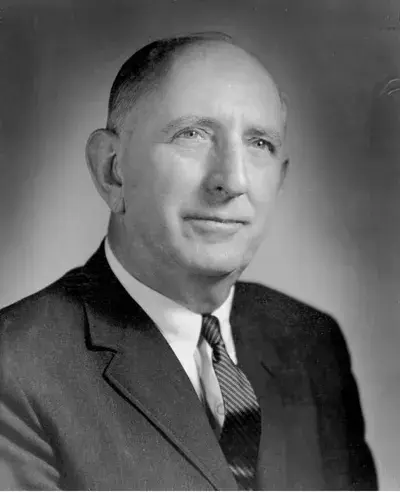
Richard Brevard Russell Jr. was an American politician. A member of the Democratic Party, he served as the 66th Governor of Georgia from 1931 to 1933 before serving in the United States Senate for almost 40 years, from 1933 to 1971. Russell was a founder and leader of the conservative coalition that dominated Congress from 1937 to 1963, and at his death was the most senior member of the Senate. He was for decades a leader of Southern opposition to the civil rights movement.
