John C. Calhoun Quotes
He [Henry Clay] is a bad man, an impostor, a creator of wicked schemes.
John C. Calhoun, 1782-1850, Vice President of the United States (Democrat, SC), U. S. Congressman & Senator (Democrat, SC), Quoted in McPhee, The Book of Insults, 1978
Sourced by: Eigen's Political and Historical Quotations


Franklin was America’s preeminent diplomat. He was particularly resented by the British authorities because he had achieved so much fame as a “British” scientist and man of letters, had been recognized and decorated by British institutions, was wealthy and very popular in London and all over Europe. Above all, the King could not understand why Franklin was not a loyalist and resented him more than most of the American rebels.

Franklin was opposed to declaring the eagle as the national bird.


Referring to Lyndon B. Johnson:

Referring to Richard M. Nixon:

For this and other “insulting” remarks, Burr challenged Hamilton to a duel in 1804 and killed him. However, the result was that Hamilton’s view of Burr was given huge publicity and Burr’s political career died along with Hamilton.


Marshall was one of the greatest soldiers who ever served America. He was the Chief of Staff throughout the Second World War and then served as Secretary of State. It was he who devised and implemented the Marshall Plan. McCarthy accused thousands of people of being disloyal including Marshall. He claimed to have lists of communists in the Army and other agencies of government, but never produced such lists. In addition to being a overbearing demagogue, he suffered (and died from) from a serious case of alcoholism. McCarthy’s false and irresponsible attacks eventually caused the Senate to censure him. That and his drinking destroyed his career. Marshall is remembered as one of America’s great figures.


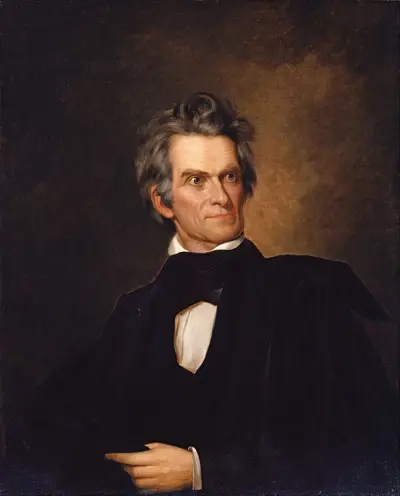
John Caldwell Calhoun was an American politician and political theorist from South Carolina who held many important positions including being the seventh vice president of the United States from 1825 to 1832, while adamantly defending slavery and protecting the interests of the white South when its residents were outnumbered by Northerners. He began his political career as a nationalist, modernizer, and proponent of a strong national government and protective tariffs. In the late 1820s, his views changed radically, and he became a leading proponent of states' rights, limited government, nullification, and opposition to high tariffs. He saw Northern acceptance of those policies as a condition of the South remaining in the Union. His beliefs and warnings heavily influenced the South's secession from the Union in 1860–1861.
