George III Quotes
… that insidious man
Franklin was America’s preeminent diplomat. He was particularly resented by the British authorities because he had achieved so much fame as a “British” scientist and man of letters, had been recognized and decorated by British institutions, was wealthy and very popular in London and all over Europe. Above all, the King could not understand why Franklin was not a loyalist and resented him more than most of the American rebels.
George III, 1738-1820, King of England & Ireland, King of Hanover, Description of Benjamin Franklin when the king suggested opening a secret back channel of communications with the American rebels
Sourced by: Eigen's Political and Historical Quotations


Characterizing Richard Holbrooke, Assistant Secretary of State (Democrat):


Referring to Lyndon B. Johnson:


Marshall was one of the greatest soldiers who ever served America. He was the Chief of Staff throughout the Second World War and then served as Secretary of State. It was he who devised and implemented the Marshall Plan. McCarthy accused thousands of people of being disloyal including Marshall. He claimed to have lists of communists in the Army and other agencies of government, but never produced such lists. In addition to being a overbearing demagogue, he suffered (and died from) from a serious case of alcoholism. McCarthy’s false and irresponsible attacks eventually caused the Senate to censure him. That and his drinking destroyed his career. Marshall is remembered as one of America’s great figures.


Franklin was opposed to declaring the eagle as the national bird.


Referring to the actions of United States Attorney General, Edwin M. Meese III, in the Wedtech case. This was a very unusual situation where a United States Attorney publicly admits to the bad behavior of a former Attorney General.

After Harry Truman stated that certain civil rights protests were communist inspired in 1960, his former Secretary of State requested that he restrain himself on this subject. The allegations of a communist conspiracy had arisen from the FBI’s chief, J. Edgar Hoover.


Characterizing Martin Luther King Jr.:


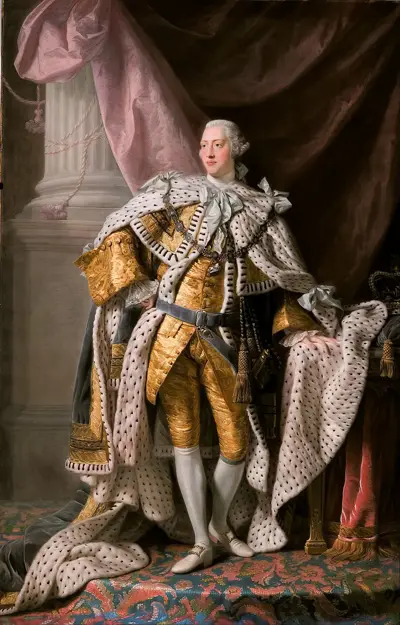
George III was King of Great Britain and Ireland from 25 October 1760 until the union of the two kingdoms on 1 January 1801, after which he was King of the United Kingdom of Great Britain and Ireland until his death in 1820. He was concurrently Duke and Prince-elector of Brunswick-Lüneburg ("Hanover") in the Holy Roman Empire before becoming King of Hanover on 12 October 1814. He was a monarch of the House of Hanover, but unlike his two predecessors, he was born in Great Britain, spoke English as his first language, and never visited Hanover.
