Henry Clay Quotes
Retaliation is sometimes mercy, mercy to both parties
Simon Bolivar and other freedom fighters in South America used this quotation to justify numerous acts of retaliation against the Spanish troops controlling their countries.
Henry Clay, 1777-1852, U.S. Congressman and Senator (National Republican & Whig, KY), Speech to Congress, 1818, Quoted in Robert Harvey, Liberators
Sourced by: Eigen's Political and Historical Quotations


His family had been killed by invading Indonesian soldiers before East Timor regained its independence.

The Abenaki Indians from Canada had come South and raided many of the settlements of upstate New York. In the process, they committed many atrocities killing civilian men, women and children. Amhurst ordered Robert Rogers and his rangers to attack the Abenaki home villiage in Canada on a famous punitive raid. The Rangers, did indeed, raid the Abenaki and wiped out all the males of the tribe that were in the camp at the time. Amhurst hated Indians, but still had his standards regarding the killing of women and children, but was perfectly willing to kill all the mature males. There were no Geneva Conventions at the time. The same general introduced biological warfare by giving Indians smallpox infected blankets. See {619646}


The President had earlier threatened to execute Confederate prisoners, if the South implemented its threat to execute any Union Negro soldiers they captured. The threat seems to have worked. See Lincoln.


Manava Dharma Shastra. This text is a part of the Hindu Holy Texts. Hindus believe that Manu was a prophet whose text is revealed or inspired.
Advising the Roman Senate to place even greater powers in the hands of Pompey: Marcus Porcius Cato Uticensis

Generally after civil wars there have been extensive reprisals and trials of the winning side against the losing one. Lincoln was determined that this pattern not be followed as the bloody war was coming to an end. Ironically, Andrew Johnson, Lincoln’s successor and a Southerner, was, together with some of the Radical Republicans, in favor of trying many of the Southern leaders for treason and rebellion. Lincoln’s view however and that of the moderate members of Congress prevailed. However, the Southern Whites generally would not comply with the Constitutional Amendments and laws regarding the role of the Negro, and Johnson was very sympathetic to their racism which led to a conflict between Johnson and Congress.

What is particularly interesting about this quotation is that the author was not a religious leader or a philosopher, but a hard-nosed military man and ruler. He recognized the corrosive effect on a society that a thirst for revenge can bring.


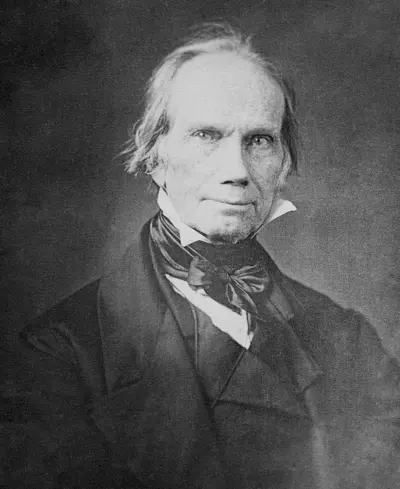
Henry Clay Sr. was an American attorney and statesman who represented Kentucky in both the Senate and House. He was the seventh House Speaker and the ninth Secretary of State. He received electoral votes for president in the 1824, 1832, and 1844 presidential elections. He also helped found both the National Republican Party and the Whig Party. For his role in defusing sectional crises, he earned the appellation of the "Great Compromiser" and was part of the "Great Triumvirate".
